 Állatmentő Szolgálat
A campaign for the legal regulation of rescuing injured wild animals
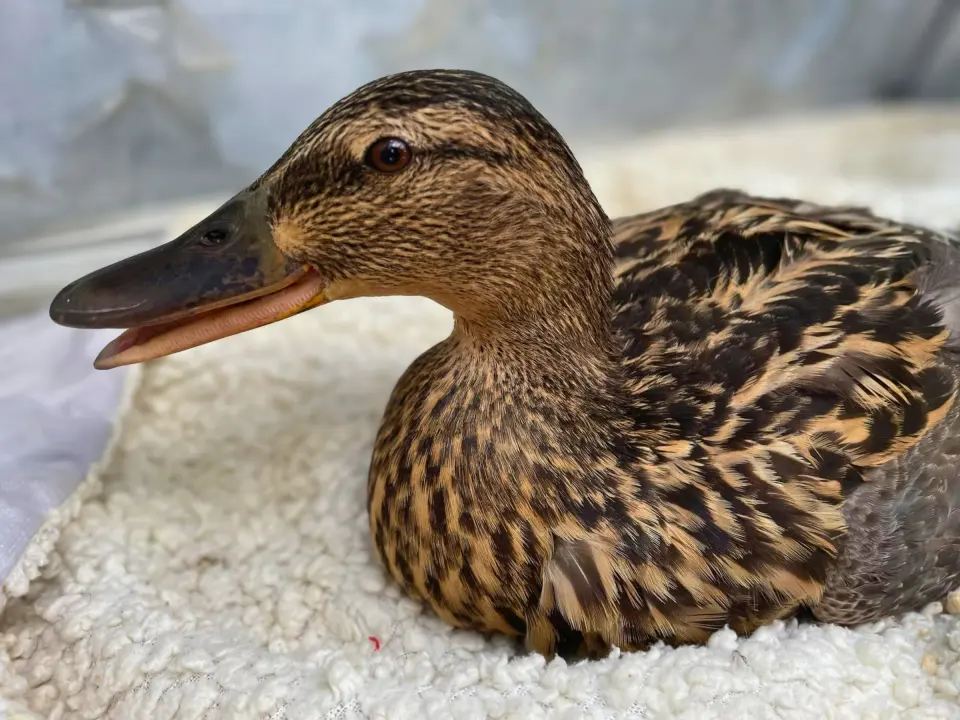
Twenty orphaned ducklings. Since 20 November, that is enough for rescuing them to be a criminal offence.
A mallard is worth HUF 25,000, and so is a duckling.
Állatmentő Szolgálat Alapítvány wants the rescue of injured and orphaned wild animals to stop running into legal obstacles. Every year thousands of wild animals in Hungary need human help, yet today an injured magpie chick or a weakened fox cub has no lawful route to a rehabilitation facility.
THE SITUATION
Rescue today carries legal risk.
On 20 November the amendment to the Criminal Code (Btk.), Act LXVI of 2026, entered into force. From that day, some cases of rescue may qualify as criminal offences.
THE SOLUTION
Our professional proposal is ready.
We are calling for a legislative amendment that gives rescue a lawful framework.
JOIN US
Stand behind the initiative.
20 ducklings · HUF 500,000 · the Criminal Code threshold
In brief
- The problemfact
The law does not allow an injured or orphaned wild animal to be captured, transported, admitted to a rehabilitation facility or kept. The law is silent on rescue, but not on keeping.
- What is missingour position
A statutory rule that makes the four steps of rescue lawful, with the detailed provisions that go with it.
- What we are doing
We requested data from the authorities, compared the relevant rules of all 27 EU Member States, and wrote a ten-section draft bill amending three Acts.
- Where it stands
- Awaiting a reply
On 8 September 2026 we sent the initiative and the draft to the Ministry of Agriculture and Food Economy (Agrár- és Élelmiszergazdaságért Felelős Minisztérium) and the Ministry for the Living Environment (Élő Környezetért Felelős Minisztérium).
- Consultation at the Ministry for the Living Environment · 4 November 2026
- Legal analysis and arguments sent · 11 November 2026
This case is one of the four cases of our Advocacy work. Every step, with dates: Where does the case stand?
What the official data show
Nearly fourteen thousand animals returned to the wild
Of the protected animals admitted to rehabilitation facilities between 2023 and 2025; numbers rounded. Source: data of public interest supplied in 2026 by the county government offices, the national park directorates and the ministry.
For wild animals, the measure of success is release, not the number admitted. A bird hit by a car or shot often arrives with injuries that cannot be healed even with the best care. This is part of the nature of the work, and every such decision is a veterinary one.

How a rescue works
Four steps from finding the animal to releasing it. The law permits none of them.
The dashed line marks where the law does not state that the act is lawful. There is no rule prohibiting rescue, but no permit for it can be obtained, and keeping without a permit is unlawful. Since 20 November 2026 it may in certain cases also be a criminal offence.
Capturing an injured animal at the scene
For huntable species, the authority considers it unlawful, because game is the property of the state. For protected species, transport is regulated, but urgent capture is not laid down as a derogation under EU law. For invasive species, it falls under an EU prohibition.
The law does not permit itTransporting the animal to a rehabilitation facility
There is no specific rule on transport. Even possession of the animal during transport has no legal basis, yet without it no rescue can begin.
The law does not permit itPlacement at the rehabilitation facility
The law in force uses the term ‘rescue centre’ (mentőközpont) but does not define it. There is no legal status, register or set of standards for rehabilitation facilities.
No rule for itCare until recovery
There is no rule on keeping for rescue purposes. Since 20 November 2026, keeping huntable birds and invasive species without a permit may in certain cases be a criminal offence.
May be a criminal offence since 20 November 2026dashed: not regulated by law solid: permitted by law
What the authorities replied
We asked the hunting authority and the ministry. They replied in writing.
In spring 2026 the Foundation asked the Ministry of Agriculture and the hunting authority in writing about rescuing huntable species. The two replies describe the same gap from two directions.
Source type: Official reply
Pest County Government Office Agricultural Department · PE/FE/00334-2/2026 · 4 May 2026
‘The “rescue” of injured game, that is, its removal from the hunting ground and its keeping and treatment by a private individual or organisation, is unlawful and constitutes a breach of the provisions of the Hunting Act, even if the act was motivated by good intentions.’
Ministry of Agriculture, Game Management Department Information · VgF/134-1/2026 · 24 March 2026
However, the Hunting Act (Vtv.) and its implementing decree (Vhr.) do not regulate the keeping of huntable animal species for rescue and care purposes.’
The authority says it is unlawful.The ministry says there is no rule for it.In other words, there is no proper route for rescue today.
Anyone who picks up an injured magpie chick or a weakened fox cub today is not in a grey zone. The hunting authority told us in writing that rescuing huntable species is unlawful. The Ministry of Agriculture replied that there is no rule on keeping for rescue purposes. The solution is not to rescue fewer animals. It is for the law to say, at last, how rescue can be carried out lawfully.
Both letters are information, not formal opinions. The authorities and the ministry state explicitly that they are not entitled to issue legal interpretations. The quotations show the answer anyone receives today when asking about the legal conditions for rescue. The quotations are our translation.
What do we propose?
Ten sections that open a lawful route for rescue
The Foundation did not file a complaint; it submitted ready-made draft legislation. We have worked out the full package. On 8 September 2026 we sent the first stage to the Ministry of Agriculture and Food Economy and the Ministry for the Living Environment; we will hand over the second stage on request.
A ten‑section legislative amendment
It amends three Acts in force, creates no new institution and has no budgetary impact. It gives rehabilitation facilities a legal status that is based on notification and open to inspection.
- Urgent capture that anyone may carry out, under conditions laid down in the Act
- An animal caught for rescue is not game ‘captured’ (elfogás) within the meaning of the Hunting Act, and catching it is not unauthorised hunting
- Notified rehabilitation facilities, with an official register
- A limit on killing invasive animals
One Act, one ministerial decree and four government decrees
Licensing, modular qualifications, keeping and release conditions, legal consequences, and specific rules for protected and invasive species.
- Explanatory memorandum and preliminary impact assessment sheet
- Species list covering 532 vertebrate species
- Professional code and handbook
- Legal harmonisation and authorisation tables
What does the proposal offer, and to whom?
For the animal
A better chance of freedom. The aim is for more animals to return to the wild without becoming habituated to people.
For rescuers
A predictable framework. Those who work professionally will not carry the same risk as someone raising a fawn in their living room.
For the authorities
At last there will be something to inspect. Rehabilitation facilities become visible, their work becomes measurable, and those who work badly can be excluded.
For game management
More oversight and fewer losses. The rehabilitation facility reports the capture and admission to the hunting authority and to the holder of hunting rights, for example the hunting association, within two working days of admission. It notifies the holder of hunting rights at the release site and the hunting authority in advance of a release; if the release cannot be delayed for animal welfare reasons, notification is made afterwards, without delay.
What the proposal does not do: it does not give anyone free rein, it does not create a new office, and it costs the state nothing.
Why is it urgent now?
2026
On this day the amendment to the Criminal Code entered into force. Parliament adopted it on 13 October, and it was promulgated in the Magyar Közlöny (official gazette) on 21 October (Act LXVI of 2026). The Act transposes an EU directive and rewrites the environmental offences. It affects rescue at three points.
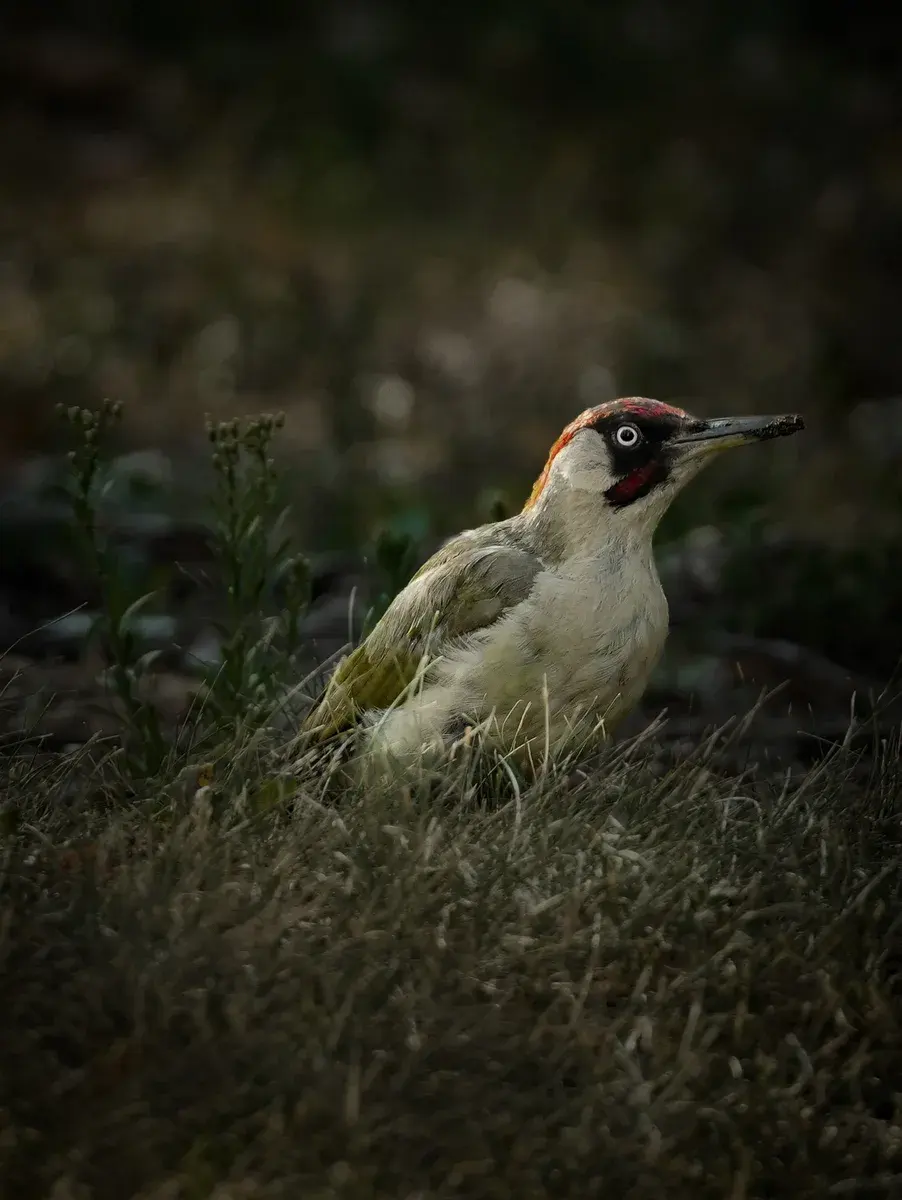
- Huntable birds, for example the mallard: unlawfully keeping them is a felony if the value of the birds kept reaches HUF 500,000.
- Introduced, invasive species, for example the raccoon: keeping a captured animal may fall under the new offence of environmental damage.
- Protected species, for example birds of prey: negligence is also punishable.
This puts rehabilitation facilities in an impossible position: either they turn the injured animal away, or they care for it and bear the risk. The route the law leaves open today, namely destroying the animal, is one that no animal welfare worker will choose.
The question arises why this has not become an issue until now. In some cases the authorities did not take action. Not always, and not as a matter of principle, but because the consequences of acting would have been worse than tacit acceptance. This practice, however, is not based on legislation, so it confers no authorisation. It cannot be relied on, it cannot be enforced, and it can change at any time.
Since 20 November this room for manoeuvre has narrowed. As long as the consequence of keeping without a legal basis was a fine, there was room for discretion. When the same conduct may be a criminal offence, those applying the law can no longer set it aside with the same practical good sense. Moreover, the hunting authority has already told us in writing that it considers keeping for rescue purposes unlawful, and the new text of the Criminal Code punishes precisely unlawful keeping. It is in all our interests that wildlife rescue stands on a professional footing, and that wild animals stay wild.
Frequently asked questions
What people ask us most
I found a young animal or a chick on its own. Can I take it?
Short answer: In most cases it is not an orphan, and you do not need to take it.
The most common mistake comes not from ill will but from good intentions. Someone finds a fawn lying alone or a chick sitting on the ground, thinks it is orphaned, and keeps it for days. Meanwhile the parent was nearby and simply stayed out of sight while there were people around.
For many species, being alone is entirely normal. A fawn lies still and scentless for days while its mother grazes nearby and only comes back to feed it. A fledgling hops about on the ground while its parents feed it. In such cases the animal is not in trouble; it only looks that way.
If you contact a specialist straight away, the family can often still be reunited, meaning the animal can go back to its parents. After two days this is usually no longer possible, and from then on a healthy animal becomes one that needs care.
Removing an animal is ethical only as a last resort. Every wild animal raised by people has a lower chance of survival after release, so rescue is not the first option but the last.
What to do instead: leave the spot, watch from a distance, keep dogs and cats away, and call a specialist before you touch the animal.
I found an injured wild animal. What should I do?
Short answer: Do not take it home and do not treat it yourself. Ask first.
Find a rehabilitation facility or a vet and ask them for guidance before you touch the animal. If it is in immediate danger, for example lying on a busy road, the first step after moving it to safety is still to consult a specialist.
For huntable species, such as roe deer, foxes or brown hares, the authority's position is that rescue is currently unlawful. This is not your fault but a gap in the rules. That is exactly what we are trying to change.
I find an injured bird in the evening and cannot reach the authority. What should I do?
Short answer: First make sure it really needs help. If it does, get it to a rehabilitation facility or a vet, and notify the authority as soon as you can reach them.
Many chicks and young animals are neither injured nor orphaned, just alone. Taking away a healthy animal does not help it. So the first step is always the same: look carefully, and if you are unsure, do not take it.
If the animal is visibly injured, bleeding, has a drooping wing or is in immediate danger, it needs help. Get it to a rehabilitation facility or a vet: that is what really helps it. For protected species the law asks you to notify the nature conservation authority before transport, but at night or at weekends this often cannot be done, and the law currently makes no exception for this. Note when and whom you tried to reach, and report what you did at the first opportunity.
Not every bird you find is a wild animal. If it is an exotic species, such as a parrot, you have found not a wild bird but someone's escaped pet. Then the first step is to look for the owner, and until the owner is found, it should likewise go to a rehabilitation facility or a vet. If the species is on the EU list of invasive species, special rules apply.
We want to fix this gap too: under our proposal, notification can also be made afterwards, without delay, if it is not possible in advance.
There is a chick sitting on the ground. Should I pick it up?
Short answer: in most cases, no.
For many species it is natural for a chick to spend a few days on the ground or among bushes before it learns to fly, while its parents feed it from nearby. The best thing you can do then is to move away and keep cats and dogs away.
Intervention is needed if the chick is visibly injured, bleeding, has a drooping wing, is covered in flies, or has had no adult bird near it for hours. If you are unsure, ask first; do not take it away.
So is rescuing wild animals prohibited now or not?
Short answer: No legislation explicitly prohibits rescue. But keeping a huntable animal without a permit is unlawful, and no permit can be obtained for rescue purposes.
For the four steps of rescue (capture, transport, admission to a rehabilitation facility and keeping for rescue purposes) there is no provision that permits the act. The Hunting Act (Vtv.), on the other hand, imposes a fine on anyone who keeps or transports game without a permit, and makes no exception for those who want to help.
Pest County Government Office told us in writing that removing and keeping injured game is unlawful ‘even if the act was motivated by good intentions’, and that no permit can be issued for this purpose. The Game Management Department of the Ministry of Agriculture replied that the law does not regulate keeping for rescue purposes.
So this is not a grey zone. Anyone who rescues injured game today is acting unlawfully, and good intentions do not change that. Since 20 November, part of this is also a criminal offence.
What changed on 20 November 2026?
Short answer: Some cases of rescue without a legal basis may become criminal offences.
On that date the amendment to the Criminal Code (Act LXVI of 2026) entered into force, through which Hungary transposed an EU directive.
If you take an injured magpie chick or a weakened fox cub to a rehabilitation facility, that does not make you an offender. For rehabilitation facilities, however, this is now a real risk. Unlawfully keeping huntable birds is a criminal offence once the value threshold is reached, and a rehabilitation facility can reach it within a few hours in spring. Keeping a captured invasive animal may fall under the offence of environmental damage.
The Criminal Code itself shows how serious this is: the maximum penalty for unlawfully keeping huntable birds is three years' imprisonment, the same as for poaching and more than for the basic offence of animal cruelty.
Today the authorities do not take action in some cases, because the consequences of acting would be worse. But this room for manoeuvre narrows once the matter becomes one of criminal law. That is why we are asking for the legal basis to be in place before entry into force.
What is wrong with raising an orphaned fawn at home?
Short answer: Because an animal habituated to people usually cannot be released.
It loses its flight response, approaches people, and after release it often dies within a short time or causes conflict. In a 1995 study by Robertson and Harris, 251 captive-reared fox cubs were marked and released into the wild over four years; 90 of them were later recovered. The survival rate was low, and in the first period after release road traffic accidents proved to be the main cause of death.
The proposal therefore expressly prohibits care practices that lead to habituation to people, and makes freedom from imprinting both an examination subject and an on-site inspection criterion.
Is it right to keep a one-legged wild bird or a paralysed fox alive?
Short answer: Not automatically. The question is not whether it can be kept alive, but whether it can still live as its species does, and whether it will ever stop being afraid.
This is the hardest question in wildlife rehabilitation, and it is also where most misunderstandings arise. The answer is not emotional but ethological.
To a wild animal, a human is a predator. It does not get used to us the way a dog or a cat does. A wild animal's nervous system is built on the premise that human presence, voice, smell and touch mean danger. An injured wild animal does not understand that we want to help. To it, every act of care is a predator approaching. This does not go away just because it eats from our hand.
Stillness is not calm. This is the most important thing a layperson misreads. When a captured wild animal falls quiet and stops moving, the finder often thinks it has calmed down or become tame. In reality the other ancient fear response besides flight is at work: freezing. At such moments the animal is in the deepest state of stress; it just does not show it. Anyone who reads this as calm usually keeps the animal longer, and so makes the situation worse.
Prolonged fear has a physiological cost. The acute stress response is natural and useful, because it prepares the animal to flee. Prolonged stress works differently: it suppresses the immune system, impairs wound healing, causes digestive disorders and makes the animal susceptible to infections that pose no danger in the wild. In birds, a classic consequence of captivity is fungal infection of the respiratory tract. In hoofed animals and birds, capture and transport can cause muscle necrosis that leads to death even days later. These are not rare complications but typical outcomes of captivity.
The case of the one-legged bird. Evolution designed a bird's body weight to be carried on two legs. On one leg, the remaining limb is permanently overloaded, and a chronic, painful inflammation of the foot typically develops, which over time becomes untreatable. Birds of prey catch their prey with their feet, so the most basic species-specific behaviour becomes impossible. For a wading bird, the standing posture itself is the problem. So the question is not whether it can eat, but whether it can exist as a bird.
The case of the paralysed fox. The fox is a territorial, nocturnal animal with a great need to move, whose primary safety strategy is flight and concealment. If it cannot run away and cannot hide, its sense of safety remains permanently absent, however good the enclosure. On top of this come the direct consequences of paralysis: impaired urination and defecation, pressure sores, urinary tract infections and the loss of self-grooming. These require constant intervention, which means constant human touch, which means constant stress.
When can the decision still be defensible? When three conditions are met together. One: the essential species-specific behaviours are possible, meaning the animal can move, hide, feed independently and regulate its body temperature. Two: the pain is manageable and the condition is not steadily worsening. Three: the animal shows no lasting signs of fear in human presence, which most often happens if it was born in captivity or came to people very young. These three rarely coincide, and that does not depend on the carer's goodwill.
The decision is guided by the animal's interest, not ours. It is hard to let go of an animal we have worked for over weeks, and at such times it is easy to read our own sense of loss as its interest. A disabled wild animal also often becomes a mascot or an animal on display, which is then no longer about the animal at all. In these situations, humane euthanasia is not the failure of the rescue but its last, responsible step. It is a veterinary decision, made case by case.
This is why regulation is needed. Today there is neither a procedure nor a professional requirement for this decision, so everyone decides at their own discretion. That is why the proposal ties the decision on the fate of a non-releasable animal to a professional code, and why it also states that a rehabilitation facility is not a zoo: wild animals cared for at a rehabilitation facility may not be visited by the public.
Does this proposal mean that anyone can keep a wild animal at home?
Short answer: no; in fact it means the opposite.
Today anyone can pick up and raise a wild animal, because there is no requirement to meet. The proposal narrows this: it makes the activity subject to notification, ties it to a defined range of species, sets conditions for keeping and release, and states that a rehabilitation facility is not a zoo: wild animals cared for at a rehabilitation facility may not be visited by the public.
Do captured invasive animals have to be killed?
Short answer: EU law does not require this, but Hungarian law offers no other route.
The EU regulation prohibits keeping, breeding and release into the environment, but leaves open several routes by which a captured animal can be placed lawfully. Hungarian law reflects none of them, so in practice killing is what remains.
In the Netherlands, a separate set of rules has governed the quality requirements for facilities that take in invasive species since 2018. The Hungarian proposal follows the same structure, with killing only at the end of the sequence, subject to a safeguard limit.
What would this cost the state?
Short answer: the first stage has no budgetary impact.
In ten sections it amends three Acts in force, creates no new institution or authority, and builds on existing powers. The cost of rescue is already borne today by civil society organisations and private individuals.
Who prepared the proposal, and what has happened to it so far?
Short answer: Állatmentő Szolgálat Alapítvány, and on 8 September 2026 we sent it to the Ministry of Agriculture and Food Economy and the Ministry for the Living Environment.
The material is based on experience in practical wildlife rehabilitation, with a systematic analysis of the Hungarian and EU law in force.
The Ministry of Agriculture and Food Economy registered it and replied on 28 September: it will examine the proposal in the planned review of hunting legislation. The State Secretariat for Biodiversity of the Ministry for the Living Environment replied by e-mail on 26 October; professional consultation began on 4 November.
What you can do
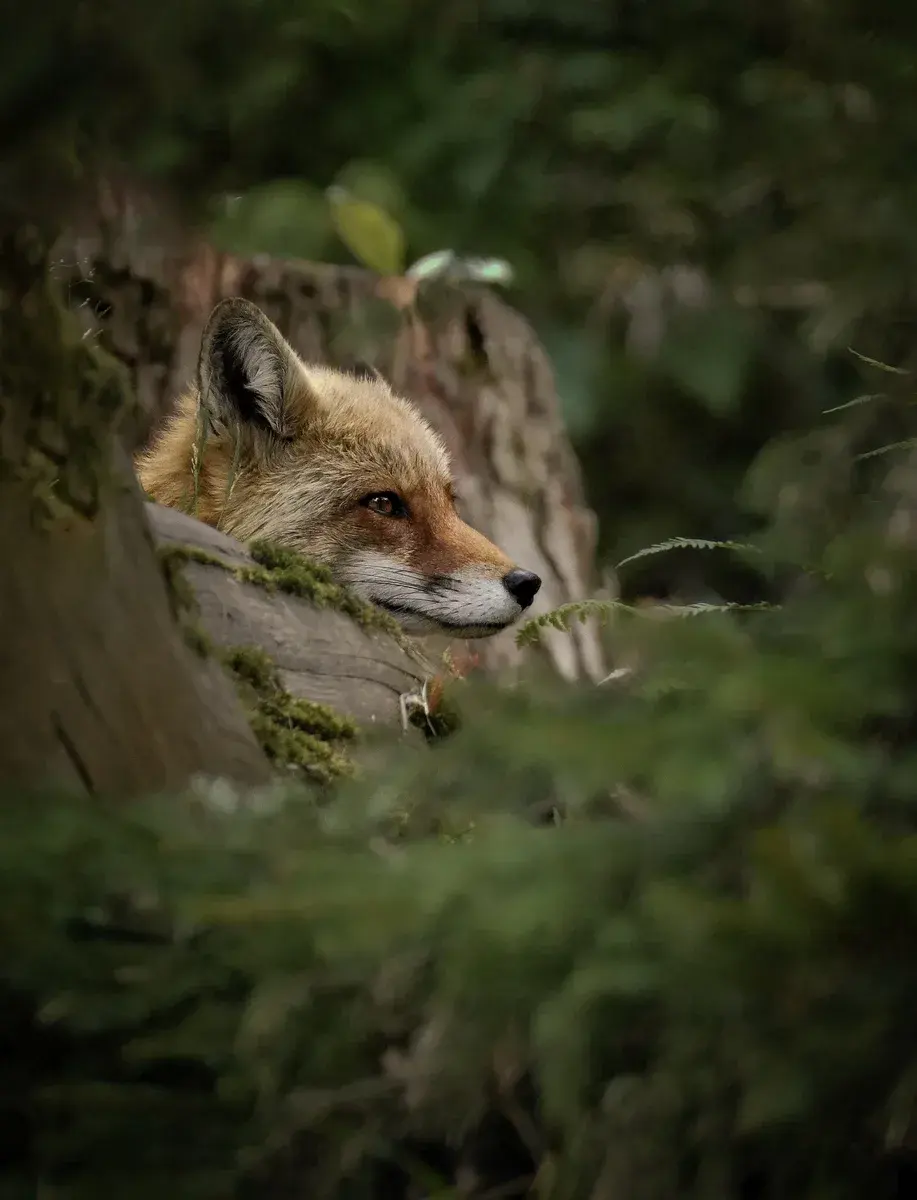
A share will not raise an orphaned duckling or fox. But a good law can give them a chance.
The drafts are proposals. Every provision requires professional and legal review; preparing legislation is the task of the competent ministries. The figures on this page come from data of public interest supplied in 2026 by the county government offices, the national park directorates and the ministry.