 Állatmentő Szolgálat
Technical summary
The legal regulation of wildlife rehabilitation: background paper
This page is the campaign’s reference base. It was written for decision-makers, lawyers and practitioners. It covers Hungarian law in force, the EU framework, the consultation with the European Commission’s Directorate-General for Environment and a comparison covering the relevant rules of all 27 EU Member States, and it quotes from the legislative text that was submitted.
The seven parts
Part I
Hungarian law in force
The hunting authority currently regards the rescue of individual animals of huntable species as unlawful. No legislation says so: the legislator has not addressed rescue at all. At four points in the rescue chain – capture, transport, admission to a rehabilitation facility and keeping for rescue purposes – there is no provision that would permit the act or make it subject to conditions.
What regulation there is, is partial and fragmented. The life course of protected species is governed by Sections 7 and 8 of Government Decree 348/2006 (XII. 23.) on the protection of protected animal species, which uses the term ‘rescue centre’ (mentőközpont), although no legislation defines it anywhere. Huntable species are governed by Act LV of 1996 on the Protection of Wild Game, Game Management and Hunting (Vtv.) and its implementing decree, Ministerial Decree 79/2004 (V. 4.) FVM (Vhr.), which exhaustively lists the forms of keeping game in enclosures but does not recognise keeping for rescue purposes. For invasive alien species, the prohibitions of Regulation (EU) No 1143/2014 apply directly. Government Decree 408/2016 (XII. 13.), which serves its implementation, reserves the ex situ permit and the acceptance of surrendered pet specimens for state- or municipality-run institutions that exhibit animals, so a civil-society rehabilitation facility cannot obtain them. Nor does the decree regulate which species count as widely spread in Hungary.
The four steps of rescue, without rules
| Point in the rescue chain | Legal status | Consequence |
|---|---|---|
| Capture | legislative silence | for huntable species, game is the property of the State and the authority regards rescue as unlawful; for protected species, urgent capture is not provided for as a derogation permitted by EU law; for invasive species, an EU prohibition applies |
| Transport | legislative silence | Possession until hand-over has no legal basis |
| Admission to a rehabilitation facility | legislative silence | The receiving institution has no legal status, no register and no set of requirements |
| Keeping for rescue purposes | legislative silence | From 20 November, Section 242(1)(d) of the Criminal Code (Btk., Act C of 2012) punishes the unlawful keeping of huntable bird species once the value threshold is reached, Section 241 the keeping of an invasive specimen (if it endangers wildlife), and Section 242(3) also the negligent form of the basic offence for protected species |
What those applying the law say
In spring 2026 the Foundation asked the responsible ministry and the hunting authority in writing about the rescue of huntable species. The two replies describe the gap from two directions.
Source type: Official reply
Ministry of Agriculture, Game Management DepartmentInformation letter · VgF/134-1/2026 · 24 March 2026 · our translation
However, the Vtv. and the Vhr. do not regulate the keeping of huntable animal species for rescue and care purposes.”
Pest County Government Office, Agricultural Affairs DepartmentInformation letter · PE/FE/00334-2/2026 · 4 May 2026 · our translation
Under the legislation in force, there is no procedure or legal institution that allows individual animals of a huntable species to be rescued, or kept temporarily or permanently, on the basis of an individual assessment.”
Both documents are information letters. Their issuers expressly state that they are not authorised to issue a formal opinion (állásfoglalás), so the documents cannot be used as a legal interpretation. As regards the need for regulation, they show that those applying the law cannot derive a lawful route for rescue from the law in force.
Since 20 November, the previous practice no longer works
If rescue is legally unregulated and has nevertheless been going on for decades, it is fair to ask why it has not become an issue before. The answer is that in some cases the authorities did not take action. Not in every case, and not as a matter of principle, but because the consequences of acting would have been worse than tacit acceptance. This practice, however, has no basis in legislation and therefore confers no authorisation. It cannot be relied on, it cannot be enforced, it can change at any time, and it does not protect a rehabilitation facility in any proceedings.
This situation changed qualitatively on 20 November 2026. Act LXVI of 2026 (promulgated in Magyar Közlöny, the Hungarian Official Gazette, 2026/156, 21 October) affects rescue at three points. The new point (d) of Section 242(1) of the Criminal Code punishes the unlawful acquisition and keeping of the huntable bird species specified in legislation if the combined game-management value of the specimens reaches ten times the highest value of small game. Under Annex 20 to the Vhr., this is HUF 500,000, which for the mallard means twenty birds. The new text of Section 241 also punishes the breach of an environmental requirement laid down in a directly applicable EU legal act if it endangers wildlife; this affects the keeping of a captured invasive specimen. And Section 242(3) makes the negligent form of the basic offence punishable as well.
This is exactly what the proposal seeks to prevent. It does not ask for retrospective exemption, nor does it look for a way out of liability. It asks for the activity to have a legal basis before entry into force, so that the authority, too, no longer has to choose between lawfulness and reasonableness.
Part II
The EU framework
The proposal does not seek a departure from EU law. It reflects in Hungarian law the room for manoeuvre that EU law expressly allows and that most Member States have already used.
- Birds Directive 2009/147/EC
- Article 5 requires a general system of protection for all wild bird species, including huntable ones. Article 9 allows derogations from it, among other things for the protection of flora and fauna. In the proposal, the urgent capture of protected bird species appears as such a conditional derogation.
- Habitats Directive 92/43/EEC
- Derogations from the strict protection under Article 12 are governed by Article 16. The urgent capture of protected species other than birds is based on this. For the huntable species listed in Annex V (European polecat, golden jackal), Articles 14 and 15 apply, and non-selective methods of capture are prohibited.
- IAS Regulation (EU) No 1143/2014
- The prohibitions in Article 7, the permit under Article 8, the authorisation under Article 9, the management measures under Article 19 and the transitional provisions under Article 31 together form the framework within which a captured invasive specimen can be placed.
- Directive (EU) 2024/1203
- The transposition deadline of the Directive on the protection of the environment through criminal law expired on 21 May 2026. It is transposed by Act LXVI of 2026 (promulgated in Magyar Közlöny 2026/156, 21 October), which entered into force on 20 November 2026.
- Commission notice C/2026/4094
- Guidance document on the general system of protection of bird species (31 July 2026). The proposal lays down the conditions for derogation at the level of legislation, having regard to points 106, 111 and 144 of the guidance.
- Why in legislation?
- According to the case law of the Court of Justice of the European Union, the conditions for a derogation must be laid down in the legislation itself, and the authority must be obliged to comply with them. Administrative practice does not constitute adequate transposition.
The most common misunderstanding
The EU Regulation on invasive species does not require a captured specimen to be killed. It prohibits keeping, breeding, placing on the market and release into the environment, but it leaves open several routes by which a captured specimen can lawfully be placed. Hungarian law reflects none of them, and in practice the difference costs the animal its life. The management measure under Article 19 concerns species that are widely spread in Hungary; for species that so far occur only sporadically, the aim is rapid and complete removal from the wild, and the route to placement is narrower.
The Netherlands is proof that this route is workable: there, a separate policy rule has governed the quality requirements for facilities receiving invasive species since 2018. The Hungarian proposal creates this placement route, building on the legal bases that the Commission’s expert team confirmed in the consultation summarised in the next part. Within the EU this is not catching up but a step forward: even in some of the Member States that otherwise regulate the whole rescue chain in an orderly way, there is no developed, lawful placement route for invasive specimens.
The route of a captured invasive specimen
TODAY
- Captured invasive specimen
- Keeping: EU prohibitionHungarian legal basis: none
- Killing remains
A single outcome, because Hungarian law names no placement route at all.
UNDER THE PROPOSAL
- Captured invasive specimen
- 1 · Permit under Article 8
- 2 · Article 19, management measure
- 3 · Article 31, receiving facility
- 4 · Authorisation under Article 9
- The specimen is lawfully placed
- 5 · humane killing
Only if none of the legal bases is available, and only with the safeguard limit laid down in the Act.
Part III
Consultation with the European Commission
On 27 July 2026 the Foundation contacted the invasive alien species team of the European Commission’s Directorate-General for Environment. The question was whether EU law offers a route for the closed, non-breeding, permanent placement of a captured invasive specimen. We received the reply on 17 August 2026, with a clarification on 19 August. The content of the reply is summarised below.
- The placement route
- For a widely spread species, a non-lethal exception may form part of the management measures, and a specimen removed in this way may be kept until its natural death under the transitional provisions, provided that breeding and escape are ruled out. Placement may take place in the facilities included in the management plan, and the reply names rescue centres among them.
- A formal framework is needed
- Such a measure must form part of a formally established management measure. It cannot be built on ad hoc, individual decisions.
- No separate permit is required
- Permanent placement does not count as research or ex situ conservation, so the permit for those purposes cannot be applied to it. The exceptional authorisation would require reasons of compelling public interest, which, according to the reply, would be very difficult to demonstrate.
- Confiscated and surrendered specimens
- The transitional provisions apply to specimens originating from captivity that have been confiscated, surrendered or abandoned, so they are assessed differently from specimens taken from the wild.
- The role of civil-society rescue centres
- The reply confirmed that a licensed civil-society rescue centre or a specialised sanctuary may take part in such a system if it meets the requirements on containment, prevention of breeding, record-keeping, professional standards and animal welfare.
- Safeguards expected
- Effective prevention of breeding, prevention of escape during keeping and transport, a surveillance system, and measures for dealing with escaped specimens.
- Expert discussion
- According to the reply, the matter can be discussed with Hungary in the EU expert forum on invasive alien species, if the Member State initiates this.
- What was ruled out
- According to the clarification of 19 August, the provision on rapid eradication cannot serve as a legal basis for keeping. The proposal therefore does not use this route at all.
We summarise the content of the correspondence and do not publish verbatim quotations from it. By the reply’s own caveat, its content reflects the views of the expert team and cannot be regarded as the official position of the Commission; only the Court of Justice of the European Union is competent to give a binding interpretation of EU law.
Part IV
All 27 EU Member States, with a single coding system
In summer 2026 the Foundation analysed the relevant rules of all 27 EU Member States on the rescue of huntable species, using a codebook fixed in advance and kept unchanged throughout the research. The coding is based exclusively on primary legal sources, that is, the Acts, decrees and implementing rules in force in each Member State, obtained from their official gazettes. In addition, we sent enquiries to the competent authority of each of the 27 Member States so that we could also compare the picture derived from the legal sources with the practice of those applying the law.
The research deliberately does not turn legislative silence into a prohibition, and it does not treat partial evidence as complete evidence.
The Member States’ replies
Source type: Research
In addition to analysing the legal sources, we sent enquiries to the competent authority of each of the 27 Member States and, where one exists, to the Member State’s professional wildlife rehabilitation organisation. So far, substantive replies have arrived from fourteen Member States, and an acknowledgement of registration from one more. The replies confirmed the picture derived from the legal sources.
Authorities and ministries
- Estonia: Keskkonnaamet, the Environmental Board, 19 August 2026
- Cyprus: Game and Fauna Service, 14 August 2026
- Slovenia: Ministry of Agriculture, Directorate of Forestry and Hunting, 341-145/2026/2, 17 August 2026
- Croatia: Ministry of Agriculture, game management unit, 20 August 2026
- Romania: Ministry of Environment, Waters and Forests, 1 September 2026
- Sweden: Stockholm County Administrative Board, game matters, 17 August 2026
- Austria: City of Vienna, MA 49, 31 August 2026
- Spain: Generalitat de Catalunya, 22 August 2026
- Netherlands: the competent ministry registered the enquiry and forwarded it to the relevant directorate-general, 18 August 2026
Professional organisations and rescue centres
- Estonia: MTÜ Metsloomaabi, 2 September 2026
- Czechia: ČSOP Zvíře v nouzi, 22 August 2026
- Germany: Wildtier- und Artenschutzstation e.V., 14 August 2026
- Ireland: Wildlife Rehabilitation Ireland, 14 August 2026
- Malta: Nature Trust Malta, 18 August 2026
- Greece: ANIMA, 17 August 2026
- Spain: GREFA, 17 August 2026
- Luxembourg: Centre de soins pour la faune sauvage, 27 August 2026
- Cyprus: a practising wildlife rehabilitator, 17 August 2026
Estonia and Hungary side by side
Estonia is a good point of comparison precisely because it is not permissive. It makes rescue subject to conditions at every point and operates a model that depends on the authority’s involvement – and yet there is no gap at any point of the chain.
| Variable | Estonia | Hungary |
|---|---|---|
| A · collection, rescue | conditional legal basis | legislative silence |
| B · possession | conditional legal basis | indirect route |
| C · transport | explicit legal basis | legislative silence |
| D · admission to a rehabilitation institution | conditional legal basis | legislative silence |
| E · veterinary treatment | conditional legal basis | conditional legal basis |
| F1 · keeping for rescue and rehabilitation | conditional legal basis | legislative silence |
| G · release | explicit legal basis | indirect route |
Source type: Official reply
Keskkonnaamet, EstoniaSummary of the reply · 19 August 2026
According to the reply of the Estonian Environmental Board, Estonia’s nature conservation act expressly allows injured or sick native animals to be taken from the wild for treatment, and abandoned or orphaned young animals to be taken for rearing. There is no state wildlife rehabilitation centre: the Board concludes cooperation agreements with civil-society organisations, which lay down the requirements on animal welfare, methodology, disease control, record-keeping, release and reporting.
Source: Állatmentő Szolgálat Alapítvány, comparative analysis of the legal routes for wildlife rehabilitation in the EU-27 Member States, 2026. Not public until the study is finalised.
The Dutch model: reception facilities for invasive species
If Estonia shows how the rescue chain can be regulated, the Netherlands shows that the question of invasive species can also be resolved within the framework of the EU Regulation. In 2018 the Dutch legislator issued a separate policy rule on the quality of reception facilities, specifically for the invasive alien animal species on the Union list. It did not seek a derogation from the EU Regulation; instead, it built into it a closed placement system tied to quality requirements.
- Who may operate one
- A registered association or foundation, or a zoo, whose statutory purpose is nature conservation and which keeps the prescribed records.
- Breeding and escape
- Mandatory prevention of breeding, with any birth reported within three days. The facility must operate a surveillance system and an emergency plan in case of escape.
- Identification
- Specimens must be permanently and individually marked and registered in such a way that the facility of origin can be traced.
- Documentation and veterinary care
- Records of admission, health assessment, veterinary treatment and final outcome. A veterinary examination on arrival, followed by documented daily health checks.
- The fate of the specimen
- The animal remains the property of the reception facility. It may go to a private individual only with a lifelong obligation of care.
- Four outcomes, in order
- Use by a licensed institution, placement in a licensed facility, permanent reception, and only after these, in accordance with a protocol, killing.
Estonia, Sweden, Cyprus
The legislator opens a narrow, supervised channel: the legal basis for rescue depends on the involvement of the competent authority. This is closest to the logic of the Hungarian proposal, which involves the hunting authority through notification and through prior notice of release.
Finland and the Baltic States
Lithuania provides an express legal basis at almost every point of the rescue chain. These examples show that regulating the whole chain with legal certainty is not a theoretical goal but working practice.
Cyprus
Cypriot law prohibits private individuals from taking possession of the animal, but not rescue itself: rescue is carried out by the competent authority, the Game and Fauna Service. The authority’s official reply of 14 August 2026 confirmed this reading.
Not a prohibition but a vacuum
Hungary is the only Member State where legislative silence exists at all four critical points of the chain at once, and the only one where the authority reads this silence as a prohibition in practice.
Part V
Wild must stay wild
The absence of regulation does not mean that no rescue takes place. It means that anyone can do it, without conditions, and no one asks what became of the animal. The greatest harm is caused not by ill intent but by well-meaning amateur care.
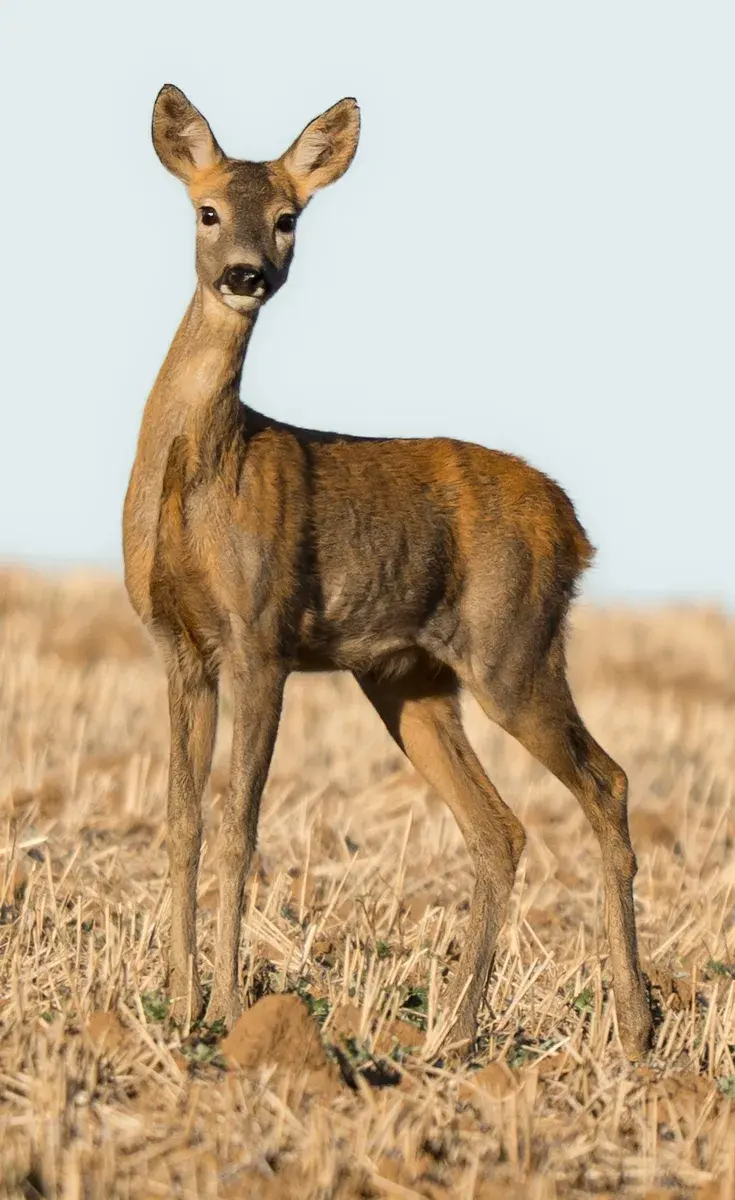
A wild animal habituated to people is lost to the wild population. A roe deer fawn that someone feeds in their garden for months cannot be released: it approaches people, its flight response does not develop, and after release it typically dies within a short time or causes conflict. This is not an objection of principle but the oldest and best-documented professional problem in wildlife rehabilitation. And in the current Hungarian situation nothing prevents it, because there is no requirement to be met.
It follows that regulation does not extend rescue but narrows it. It ties rescue to a defined range of species, to notification and to conditions for keeping and release, and it states that what anyone may do today may in future be done only in a specified way.
This is not a Hungarian peculiarity but a basic professional principle of wildlife rehabilitation. It is precisely for this reason that the Estonian authority laid down stricter conditions for large game species.
Source type: Official reply
Keskkonnaamet, EstoniaSummary of the reply · 19 August 2026 (the same letter)
The Estonian authority laid down stricter conditions for large game species because prolonged human contact during rehabilitation can lead to habituation to people. This reduces the chances of release and also poses a public safety risk.
What it offers, and to whom
Fewer losses, more oversight
Game is the property of the State, and the population is managed by the holder of hunting rights. Today every specimen habituated to people is lost to the population, and the holder of hunting rights does not even find out. The proposal requires capture and admission to a rehabilitation facility to be notified within two working days, and the locally competent holder of hunting rights and the hunting authority must be notified in advance of the place and time of release. Under the second stage, the holder of hunting rights may also object to the release site on specified grounds.
At last there is something to inspect
Today the authority can choose between two bad options: turn a blind eye or find unlawfulness. It cannot deal with the question of professional quality, because there is nothing to measure it against. The notification system makes rehabilitation facilities visible, the requirements make their work measurable, and the legal consequences make exclusion possible.
A better chance of freedom
The aim is not for more wild animals to live alongside people, but for more of them to return to the wild, not habituated to people. The conditions for release are that the specimen is capable of living independently in its natural habitat, is fit from an animal health point of view and is unambiguously identified as to species.
A predictable framework
Anyone who does this work seriously today bears the same legal risk as someone who raises a roe deer fawn in their living room. Regulation separates the two, and this is above all in the interest of the rehabilitation facilities that work professionally.
Preventing imprinting in the package
In the proposal, preventing habituation to people is not a declaration of principle but a specific, enforceable requirement, from the Act through to the examination.
Source type: Draft legislation
Draft ministerial decreeThe prohibition does not cover cooperative care, that is, the documented habituation of a permanently placed specimen to veterinary treatment and transport · our translation
Keeping or care practices that result in the specimen becoming habituated to people are prohibited.”
Draft ministerial decreeThe examiner establishes freedom from imprinting at the rehabilitation facility, by inspecting the specimens kept there on site
The practical examination covers competence in species knowledge and ethology, rescue and capture, keeping and feeding, prevention of imprinting, and preparation for release.”
New chapter of the Animal Protection Act (Ávtv.)The inspection criteria expressly include whether the facility keeps any specimen that was cared for in a way that habituated it to people, taught it to respond to a name or exhibited it to the public · our translation
A rehabilitation facility does not qualify as a zoo or an animal home (állatotthon); wild animals kept at a rehabilitation facility may not be exhibited to the public.”
Part VI
The structure of the proposal, with quotations
In ten sections, the first stage amends three Acts in force. The provisions below show how the four missing legal bases are put in place.
Source type: Draft legislation
New chapter of the Animal Protection ActThe legal basis for capture
Any person may capture an injured, sick, weakened or orphaned wild animal, or one in immediate danger, for the purpose of urgent assistance and hand it over without delay to a rehabilitation facility or a veterinarian, if the animal’s rescue cannot be ensured by any other satisfactory solution.”
Amendment to the Hunting Act (Vtv.)The legal basis for transport and possession · our translation
Capture under subsection (1), the related transport of the specimen and its possession until it is handed over to a rehabilitation facility or a veterinarian do not constitute the conduct under Section 84(1)(e) and (k), and do not qualify as unauthorised hunting.”
New chapter of the Animal Protection ActThe legal status of the rehabilitation facility
Within the range of animal species specified in its notification, a rehabilitation facility is entitled to capture, transport, temporarily keep, treat and care for wild animals for the purpose of wildlife rehabilitation. A rehabilitation facility does not qualify as a zoo or an animal home (állatotthon); wild animals kept at a rehabilitation facility may not be exhibited to the public.”
Amendment to the Nature Conservation Act (Tvt.)The legal basis for placing an invasive specimen, in line with the reply of the Commission’s IAS team · our translation
A specimen of an invasive alien species of Union concern may not be released into the wild. Only a permit or authorisation under Article 8 or 9 of Regulation (EU) No 1143/2014 of the European Parliament and of the Council […], the implementation of a management measure formally established and published under Article 19 of that Regulation, or […] placement in a receiving facility under Article 31 of that Regulation may provide a legal basis for keeping the specimen permanently.”
Why notification and not a licence in the first stage
A licensing system requires a set of conditions, a procedure and an established qualification framework. These are matters for the second stage, and they take time. Notification, by contrast, works immediately: it gives the activity a legal basis, makes rehabilitation facilities visible to the authority, and creates the possibility of inspection and prohibition. Notification does not exempt anyone from the requirements on animal welfare, keeping and animal health. The transitional provision of the second stage brings notified rehabilitation facilities into the licensing system with a grace period.
The first stage creates no new institution and has no budgetary impact. The impact assessment sheet is based on Section 17 of Act CXXX of 2010 on Legislation, and the explanatory memorandum on Section 18(1).
Part VII
References
Hungarian legislation
- 1998. évi XXVIII. törvény az állatok védelméről és kíméletéről [Act XXVIII of 1998 on the Protection and Humane Treatment of Animals] (in Hungarian)
- 1996. évi LV. törvény a vad védelméről, a vadgazdálkodásról, valamint a vadászatról [Act LV of 1996 on the Protection of Wild Game, Game Management and Hunting] (in Hungarian)
- 1996. évi LIII. törvény a természet védelméről [Act LIII of 1996 on Nature Conservation] (in Hungarian)
- 2010. évi CXXX. törvény a jogalkotásról [Act CXXX of 2010 on Legislation], Sections 17 and 18 (in Hungarian)
- 2016. évi CL. törvény az általános közigazgatási rendtartásról [Act CL of 2016 on the Code of General Administrative Procedure] (in Hungarian)
- 348/2006. (XII. 23.) Korm. rendelet a védett állatfajok védelmére, tartására, hasznosítására és bemutatására vonatkozó részletes szabályokról [Government Decree 348/2006 (XII. 23.) on the detailed rules for the protection, keeping, use and exhibition of protected animal species], Sections 7 and 8 (in Hungarian)
- 408/2016. (XII. 13.) Korm. rendelet az idegenhonos inváziós fajok betelepítésének vagy behurcolásának és terjedésének megelőzéséről és kezeléséről [Government Decree 408/2016 (XII. 13.) on the prevention and management of the introduction and spread of invasive alien species] (in Hungarian)
- 79/2004. (V. 4.) FVM rendelet a vadászati törvény végrehajtásáról [Ministerial Decree 79/2004 (V. 4.) FVM on the implementation of the Hunting Act] (in Hungarian)
- 2012. évi C. törvény a Büntető Törvénykönyvről [Act C of 2012 on the Criminal Code], Sections 241–243 and 245 (in Hungarian)
- 2026. évi LXVI. törvény a büntetőjogi tárgyú és ehhez kapcsolódóan egyéb törvények módosításáról [Act LXVI of 2026 amending Acts on criminal law and, in connection with them, other Acts] (T/568.), in force from 20 November 2026 (in Hungarian)
- 2025. évi XCVII. törvény [Act XCVII of 2025] (Chapter IV/A of the Vtv.) (in Hungarian)
EU legal acts
- Regulation (EU) No 1143/2014 of the European Parliament and of the Council on the prevention and management of the introduction and spread of invasive alien species, Articles 7, 8, 9, 19 and 31
- Directive 2009/147/EC of the European Parliament and of the Council on the conservation of wild birds, Articles 5 and 9
- Council Directive 92/43/EEC on the conservation of natural habitats and of wild fauna and flora, Articles 12, 14, 15 and 16
- Directive (EU) 2024/1203 of the European Parliament and of the Council on the protection of the environment through criminal law
- Directive 2005/36/EC of the European Parliament and of the Council on the recognition of professional qualifications
- Directive (EU) 2018/958 of the European Parliament and of the Council on a proportionality test before adoption of new regulation of professions
- Commission Notice: Guidance document on the general system of protection of bird species, C/2026/4094, 31 July 2026
- Netherlands: Beleidsregel kwaliteit opvang invasieve uitheemse diersoorten [Quality requirements for reception facilities for invasive animal species on the Union list], Staatscourant 2018, 28120 (wetten.overheid.nl, BWBR0040911) (in Dutch)
Correspondence and own sources
- European Commission, Directorate-General for Environment, IAS team: reply to the Foundation’s enquiry of 27 July 2026, 17 August 2026, clarification 19 August 2026
- The Foundation’s enquiry to the competent authorities of all 27 Member States, summer 2026. Substantive replies from fourteen Member States, including the Estonian Keskkonnaamet (19 August 2026), the Cypriot Game and Fauna Service (14 August 2026), the Slovenian Ministry of Agriculture (341-145/2026/2, 17 August 2026), the Croatian Ministry of Agriculture, the Romanian Ministry of Environment, the Swedish Länsstyrelsen, the City of Vienna’s MA 49 department and the Generalitat de Catalunya
- Ministry of Agriculture (Agrárminisztérium), Game Management Department: information letter, VgF/134-1/2026, 24 March 2026 (in Hungarian)
- Ministry of Agriculture and Food Economy (Agrár- és Élelmiszergazdaságért Felelős Minisztérium), Fisheries and Game Management Department: reply to the initiative, HVgF/20/2026, 28 September 2026 (summarised; in Hungarian)
- Pest County Government Office (Pest Megyei Kormányhivatal), Agricultural Affairs Department: information letter, PE/FE/00334-2/2026, 4 May 2026 (in Hungarian)
- Data of public interest supplied in 2026 by the county government offices, the national park directorates and the ministry, 24 data providers (in Hungarian)
- Állatmentő Szolgálat Alapítvány: az EU-27 tagállamok vadrehabilitációs jogi útvonalainak összehasonlító elemzése [Comparative analysis of the legal routes for wildlife rehabilitation in the EU-27 Member States], 2026. Author: Edina Némedi. The English version is being prepared for academic publication under the title Rescue, Rehabilitation and Release of Huntable Wildlife Species in the European Union: A Comparative Legal Analysis of the 27 Member States; Cambridge University Press has granted a full (100 per cent) waiver of the publication fee in response to an application submitted for the study. The finalisation of the study and its independent peer review are under way, so it is not yet public
Publications
- Dr Cecília Kajó and Edina Némedi: Vadállatmentés jogi vákuumban [Wildlife rescue in a legal vacuum]. Jogi Fórum, 20 March 2026 (in Hungarian)
The drafts are proposals. Every provision requires professional and legal review; preparing legislation is the task of the competent ministries.