 Állatmentő Szolgálat
Platform
TNR Register
A national register for trapping, neutering and returning unowned cats. It is working: anyone can report unowned cats, and organisations and veterinary clinics can register.
A shared workspace for people who report cats, animal welfare organisations and veterinarians. Today, work for unowned cats is fragmented: reports arrive by phone and in messages, organisations keep their records in spreadsheets, veterinary appointments are arranged one by one, and there is no national picture. The TNR Register brings all of this together in one place.
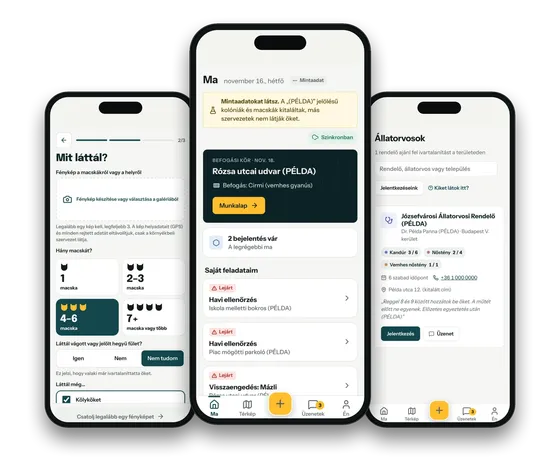
In brief
- The problemfact
-
Today nobody can say how many unowned cats live in Hungary, where they are, or how many neutering operations would be needed for their number to fall. The work is done organisation by organisation, in isolation.
- What is missingour position
-
A shared register in which a colony's path from the first report to the monthly check can be followed cat by cat, and which shows coverage, not just the number of operations.
- What we are doing
-
The TNR Register is our own development, and we fund the server and the entire technical background.
- Where it stands
- Working
Reporting and tracking by code are working, as is registration for organisations and clinics. In preparation: aggregated data for decision-makers.
What it is
One register, four kinds of user
The TNR Register is a national register for trapping, neutering and returning unowned cats. Everyone sees and keeps the same register, but only the part they need for their work.
- For people reporting cats
Two minutes, without registration. Anyone who sees unowned cats can report them with a photo and the location. The report goes to an animal welfare organisation working in the area, and the person reporting can follow what happens to it with a code.
- For animal welfare organisations
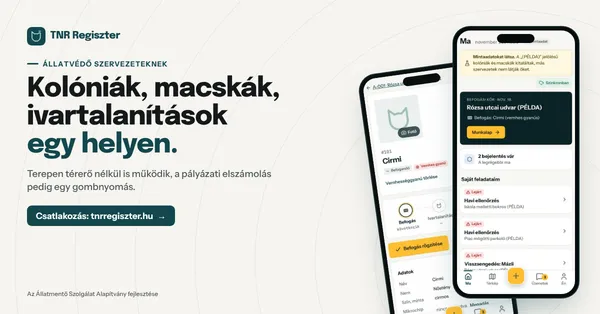
All the work in one place: colonies, cats, trapping, neutering, return, tasks and team – on the phone in the field, on the computer in the office. Activity reports and grant accounting are produced at the press of a button.
- For veterinarians
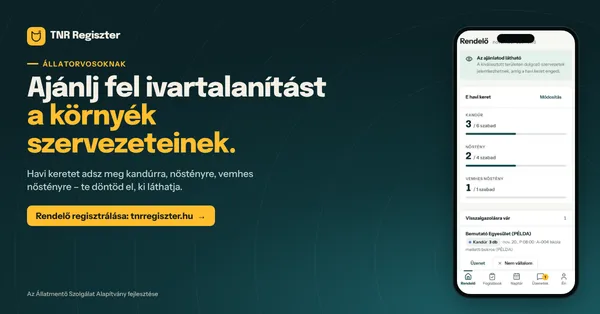
Neutering on the clinic's own terms. The clinic sets a monthly quota for each category, decides which organisations can see its offer, and manages bookings linked to its own calendar.
- For decision-makers
In preparation. Coordinated work produces consistent data; aggregated by municipality, without exact locations, it can show where the need is and how great it is.
Why it is needed
Neutering at random is not enough
TNR (trap, neuter, return) is a humane, long-term way of managing unowned cats. The cats stay where they are used to living and continue to be cared for, but no more kittens are born. It only works if most of the cats in a colony are neutered and the colony is checked regularly for newcomers.
If a cat is neutered here and there, numbers barely fall: the others keep breeding, and new ones arrive. Who in a colony is neutered, who is new and who is missing can only be seen from regular, cat-by-cat records. In Hungary, ear-marking is not automatically permitted, so an unmarked ear proves nothing either. The register fills this gap.
Spain
What do the figures show?
Using data from 1,128 municipalities, an estimated 1.81 million community cats live in about 125,000 colonies. At a neutering rate of about 20%, the model projects that their number could exceed 5 million by 2050; with targeted neutering of 50–70% by area, it stabilises at about 1.5 million by 2030.
Córdoba
One city, one shared register
In 2020 a city-wide programme was launched: 225 colonies were entered in a shared register, and within four years neutering coverage reached 95%, at an average annual cost of EUR 0.62 per resident.
Sources: Luzardo et al., Animals 2025, 15(15):2278 (doi.org/10.3390/ani15152278 (opens in a new tab)); Luzardo et al., Animals 2025, 15(4):482 (doi.org/10.3390/ani15040482 (opens in a new tab)).
How it works
From the first report to the results
Seven steps, four kinds of user. Everyone sees and keeps the same register, but only the part they need for their work.
- 01
Report
The person reporting states what they saw: a photo, the location, how many cats. They receive a code to follow the report.
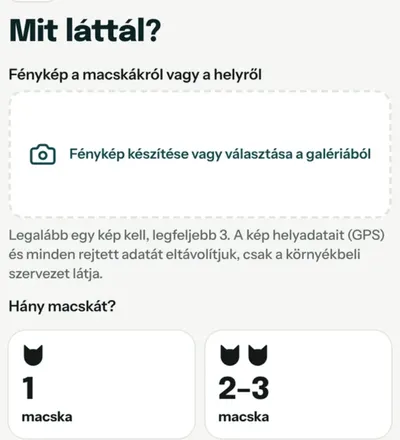
The reporting form. Sample image with fictitious data. - 02
Review
The organisation assigns the report to an existing or new colony, or passes it on.
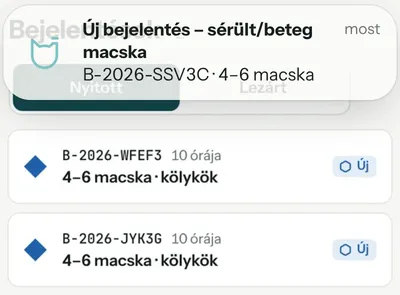
The organisation is notified of the new report. Sample image with fictitious data. - 03
Survey
The organisation surveys the colony cat by cat: sex, coat pattern, photo, estimated size.
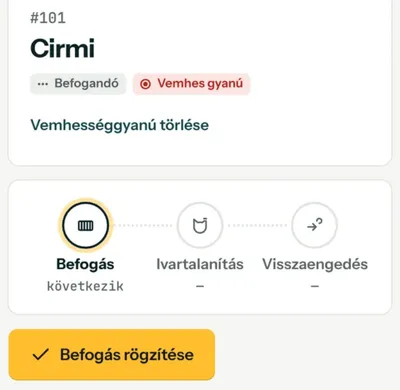
A cat's record. Sample image with fictitious data. - 04
Trapping round
In the field, a mobile worksheet that records data even without a signal.
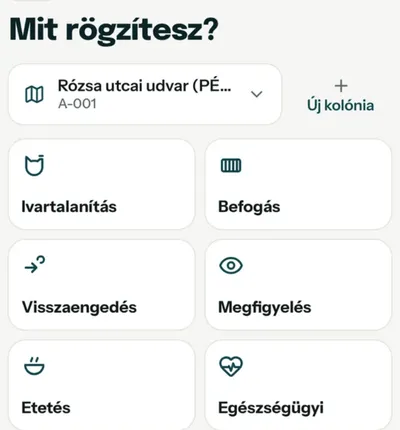
Recording in the field. Sample image with fictitious data. - 05
Neutering
The veterinary appointment comes from the clinic's quota; the cost and funding are recorded.
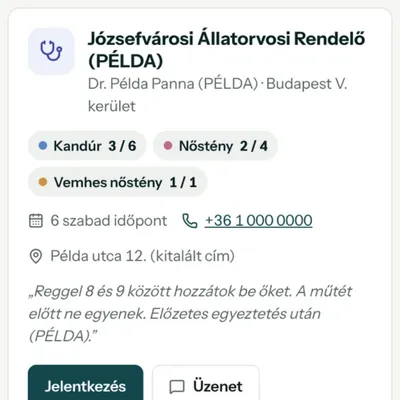
Clinics' offers and free quotas. Sample image with fictitious data. - 06
Return and monthly check
The organisation returns the cats and checks every month who is new and who is missing.
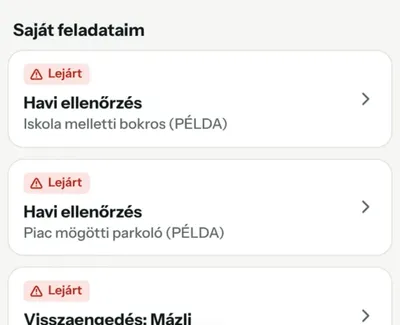
The ‘Today’ page with overdue checks. Sample image with fictitious data. - 07
Results
Coverage per colony, activity reports and grant accounting in PDF and Excel. In future, an anonymous picture aggregated by municipality for decision-makers.
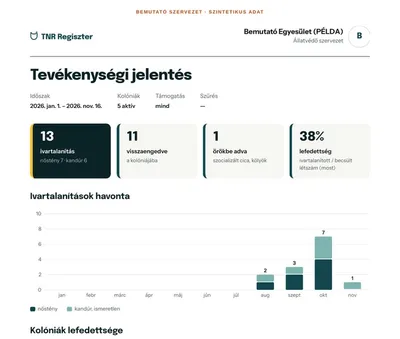
Sample activity report (detail); demonstration organisation, fictitious data.
Who sees what?
- The report
goes only to the approved organisation working in the area. The exact location of the colony is visible to the organisation's coordinators and the volunteers assigned to the colony.
- Another organisation
sees only whether someone is already working in an area of about 5 km², and with how many colonies. This avoids duplicated work and keeps locations protected.
- If an organisation cannot take it on
the report goes to the next organisation working in the area. If there is none, the operator looks for an organisation that will take it over.
For people who report cats
Have you seen them? Tell us.
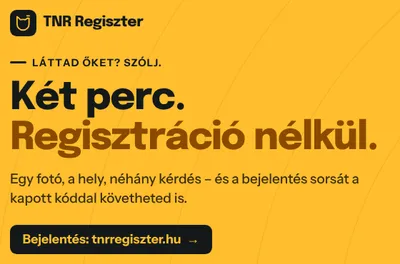
Reporting takes two minutes, without registration, also from a phone. We cannot promise immediate action, because the organisations are made up of volunteers and are overstretched. But no report is lost, and each one adds to the national picture.
- 01
Start a report
On the reporting page of tnrregiszter.hu.
- 02
What did you see?
A photo, how many cats, and whether there are kittens, injured or pregnant cats among them.
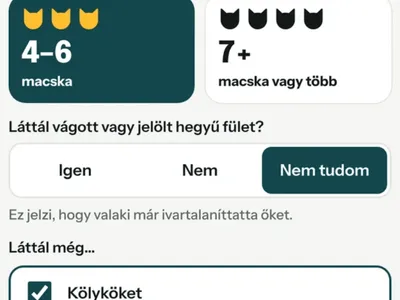
The questions on the reporting form. Sample image with fictitious data. - 03
Tracking by code
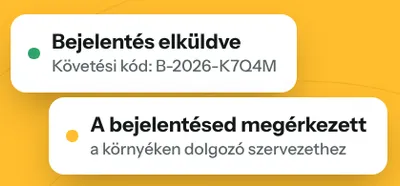
You also receive the code by e-mail, without the exact location.
- The location
can be marked on the map or by address; we do not publish the exact location.
- From the photo
we remove all hidden data, including GPS coordinates.
- For an injured cat
we also tell you where to turn for immediate help.
- If no organisation in the area has joined yet
we tell you that too. The report still counts: it shows where help is missing.
For animal welfare organisations
Every cat's journey in one place
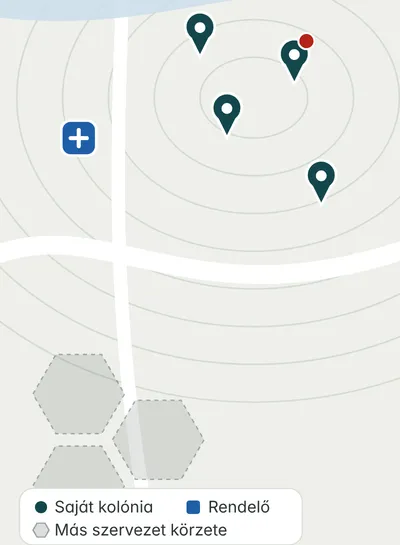
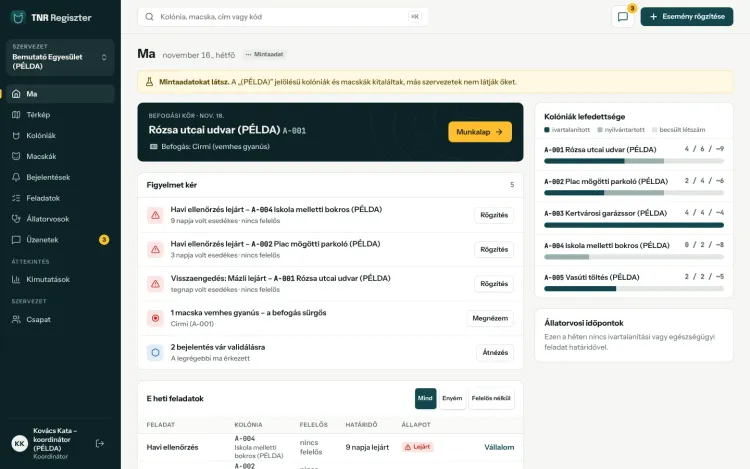
The ‘Today’ page shows at a glance what is urgent: overdue checks, cats that appear pregnant, reports awaiting review, the week's tasks and the coverage of the colonies. For each colony and each cat you can see who is neutered, who is to be trapped and who is new; every step is recorded with a date, a veterinarian and a photo.
- Colonies
with estimated size, details of the feeder and of access, and hazards on site.
- Cats
with code, name, sex, coat pattern and photo; suspected pregnancy is marked separately.
- Events
trapping, neutering, return, adoption, veterinary care, monthly check.
- Cost and funding
per neutering; the grant accounting is produced from this.
- Roles
admin, coordinator, volunteer. A volunteer sees the exact location only of the colonies assigned to them.
In the field
From a phone, even without a signal
The trapping round worksheet lists the colony's cats that are to be trapped, with those that appear pregnant first. What is ticked off on site is kept by the phone even without a signal and uploaded once the connection is restored. The admin adds team members with an invitation link; the team, partner organisations and veterinarians coordinate through internal messages. Every opening of an exact location and every deletion is logged.
Reports
Activity reports and grant accounting
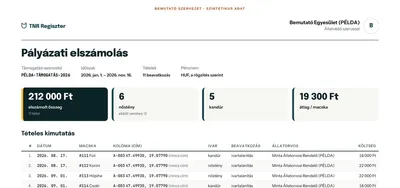
The activity report can be produced for any period, without exact locations. The grant accounting relates to one grant reference, itemised, with a summary and a signature line. Because it contains addresses, only the coordinator and the admin can download it, and every download is logged.
For vets
Neutering on the clinic's own terms
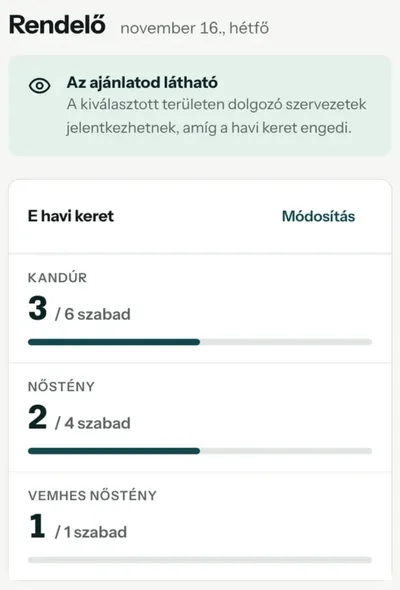
If a clinic is willing to neuter unowned cats, it can let organisations working in the area know here. How many, for whom and when is for the clinic to decide. Organisations see the offers available to them and the free quotas, book appointments and discuss the details by message.
- Monthly quota by category
separately for tomcats, females and pregnant females; once the quota is full, no more bookings come in.
- Who can see it
nationwide, in one county or in selected municipalities; individual organisations can also be excluded.
- Calendar
Google, Outlook or iCloud: it takes free slots from there and writes bookings back to it.
- Standing partnership
with individual organisations, if they work together regularly.
- Joining
requires the names of the veterinarian and the clinic, a phone number and the practice licence number. The clinic appears after approval.
Coverage
Ten operations – two different results
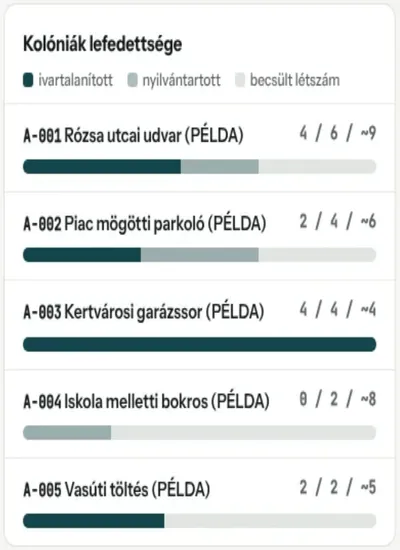
The number of operations performed does not on its own show whether a TNR programme is effective. If ten cats are neutered in a population of one hundred, that is ten successful procedures – but in terms of population management it means something quite different from neutering ten animals in a colony of twelve.
That is why the TNR Register shows coverage for each colony: the neutered, recorded and estimated numbers. You can see at once where there is still work to do.
For decision-makers
Data you can plan with
In preparation
In the TNR Register, consistent data is generated from organisations' day-to-day work. It can show how many colonies there are, their estimated size and coverage, using one method nationwide; where most reports come in, and where there is not yet an organisation to take them on; and how much neutering has been done, from what sources and at what cost, traceable grant by grant.
Under the plans, ministries, decision-makers and public bodies will see aggregated data only: without exact addresses or coordinates, broken down by municipality (by district in Budapest), for a known and recorded purpose, and only from organisations that have consented. We do not hand over personal data.
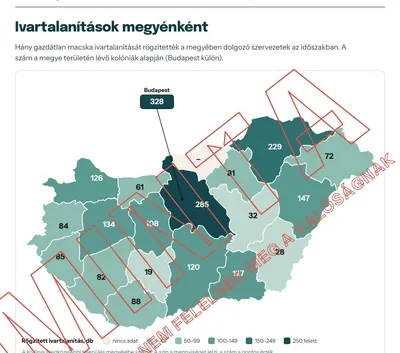
National report
In a year's time we could have a real picture
If organisations record their work in the TNR Register, in a year's time we could have a real picture of the situation of cats across the country. The national report will provide this picture, by county and by municipality, without names, addresses or exact locations. Sample report with fictitious data (PDF, in Hungarian) (opens in a new tab)
Spain
Why now?
In 2023 Spain made registry-based, TNR-style management of community cats a legal requirement, and built its national plan on municipal data. According to the model, targeted, monitored neutering by area stops the growth; scattered work does not.
We are happy to present the system to local authorities and public bodies, and to work out together what kind of aggregated data would help their work.
Data protection and security
Where the cats are is protected data
In the wrong hands, the exact location of a colony can put the animals at risk. So everyone sees only what they need for their work, and this is enforced by the server, not the browser.
- Exact location only for those who need it
visible to the managing organisation's coordinators and the volunteers assigned to the colony; every opening is logged. Other organisations see only an area of about 5 km², and the public sees nothing.
- Organisations kept separate
at database level: one organisation cannot access another's data.
- Data in the EU
hosting is in Germany, in an EU data centre. The connection is always encrypted, and we store only an irreversible hash of passwords.
- Only as long as needed
a closed report is deleted after 2 years, its photos after 1 year and the reporter's e-mail address after 90 days, automatically, every night. An account can be deleted at any time.
- Photos without hidden data
uploaded images are re-encoded; we do not store the data written by the camera, including GPS coordinates.
- Transparent rules
the privacy notice is available at tnrregiszter.hu. Data controller: Állatmentő Szolgálat Alapítvány.
Joining
How can we get started?
We admit organisations and clinics after approval, so that only genuine organisations and authorised veterinarians can access sensitive data.
- For people reporting cats
a photo, the location, a few questions, and the report is on its way. No registration needed.
- For organisations
registration on the website. After approval, they set their area of operation, invite their team and can start work. On request, we demonstrate the system with fictitious data.
- For veterinarians
register the clinic with its name, phone number and practice licence number. After approval, the offer appears to the selected organisations.
Questions, cooperation, demonstrations: kapcsolat@tnrregiszter.hu
Where it stands
Working
Status as of November 2026. The TNR Register is developed by Állatmentő Szolgálat Alapítvány; the foundation funds its server and its entire technical background.
-
Reporting and tracking by codeWorking
without registration, also from a phone
-
Workspace for organisationsWorking
colonies, cats, trapping rounds, tasks, reports; after approval
-
Veterinary offers and calendarWorking
after the clinic has registered and been approved
-
Aggregated data for decision-makersIn preparation
aggregated by municipality, without exact locations or personal data
-
National reportPlanned
a sample with fictitious data is available
Frequently asked questions
Questions about the TNR Register
What is TNR?
Trap, Neuter, Return. A humane, long-term way of managing unowned cats: the cats stay where they are used to living, but no more kittens are born. It only works if most of the cats in a colony are neutered and the colony is checked regularly for newcomers.
Is the TNR Register already working?
Yes. At tnrregiszter.hu anyone can report unowned cats without registration; organisations and clinics can register and use it after approval. Aggregated data for decision-makers is in preparation.
Can I report cats now?
Yes, on the tnrregiszter.hu reporting page (opens in a new tab), in two minutes, also from a phone. The report goes to an organisation working in the area, and you can follow it with a code.
Who can see the exact location of colonies?
The coordinators of the organisation managing the colony and the volunteers assigned to it; every opening is logged. Other organisations see only an area of about 5 km², and the public sees nothing.
How can our organisation join?
Register at tnrregiszter.hu; after approval, you set your area of operation and invite your team. If you have questions, write to kapcsolat@tnrregiszter.hu.
Practical knowledge
In Knowledge & Research
Alongside the register, these can also help.
Share
Tell someone who looks after a cat colony
If you know an organisation, a veterinarian or a carer who works with unowned cats, send this to them.
Alongside the work in the field, the infrastructure is missing too.
The foundation funds the server and the entire technical background of the TNR Register. If you would like to join as an organisation, or to support its running, write to us.
- Know who you give toOur other platform: what an animal welfare organisation has published about itself.
- Stray animals and dog controlWhat you can do if you come across a stray animal – in Knowledge & Research.
- AdvocacyOur cases in one place: what the problem is, what we have done, where it stands.
The ratio chart is an illustrative example. The tnrregiszter.hu screenshots and the sample national report contain fictitious data marked ‘PÉLDA’ (‘example’).