 Állatmentő Szolgálat
What kind of life awaits an animal whose injury will never go away?
Many of the animals living with us need care that does not end with surgery or treatment. Among them are animals with spinal injuries, blind and chronically ill animals, and some that are afraid of people because of their past. For them, too, medicine, food and a clean bed are only the basics. A good life takes more: exercise, play, exploration, company and, wherever possible, the chance to make their own choices.
- 58
- animals in our care
- 21
- of them permanently disabled
- 16
- rooms, enclosures and an aviary
Daily life
A day with us
The day almost always starts at dawn and ends late in the evening. Most of it runs the same way every day: our animals need a daily routine, so we have built a system that we can sustain over the long term. This routine is not a matter of convenience. For an animal that moves slowly, sees poorly or finds it hard to trust others, a predictable day means safety.
Morning
The first round
- Feeding, the first outings and a check on everyone. We know how each of our animals behaves, so we can tell first thing in the morning if someone is unwell.
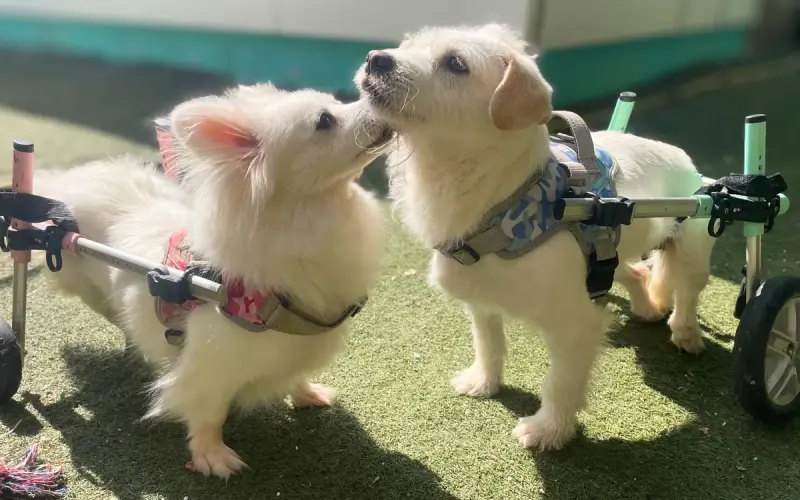
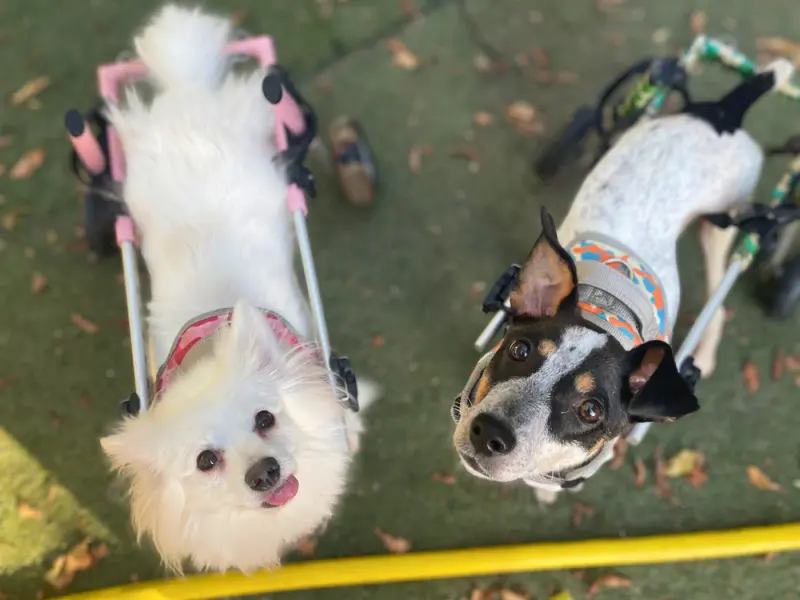
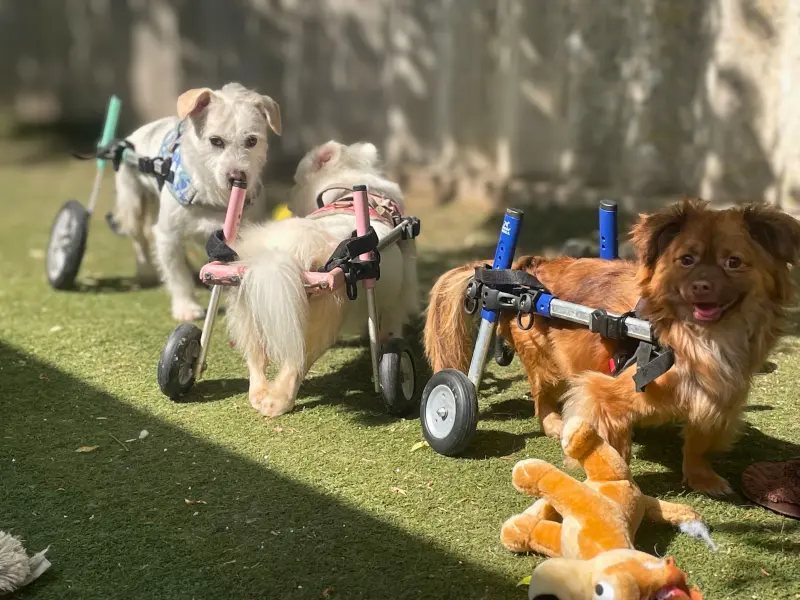
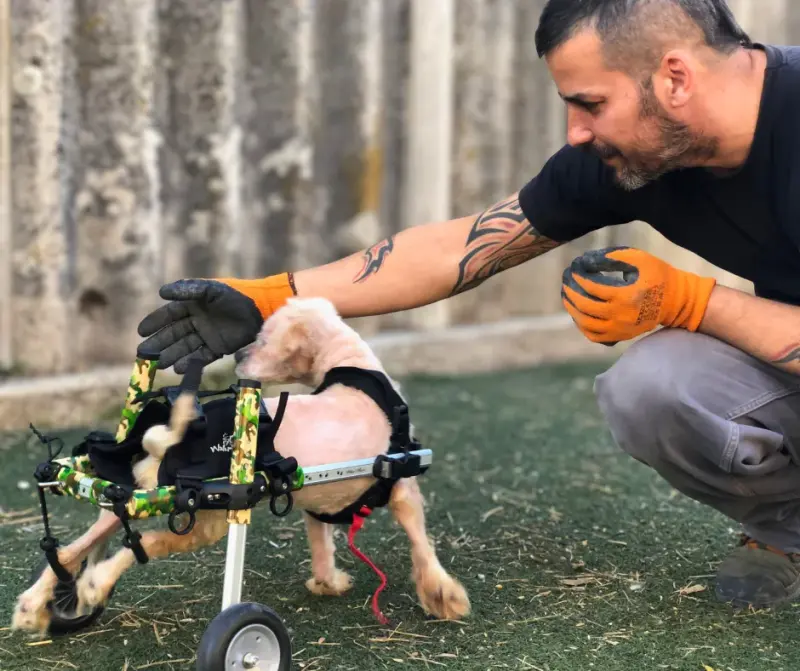
- The morning part of special care: for example for the paralysed dogs, who have to be put into their wheelchairs and also helped to empty their bladders. While they play outside, we take care of hygiene inside.
- The first round of outings, group by group. This also matters for their safety.
During the day
Cleaning, more rounds, treatments
- Hygiene and maintenance. Cleaning, laundry, painting, insulating, putting up plasterboard.
- More rounds outside: exercise, play, sniffing; after that our animals have a siesta, but only they do.
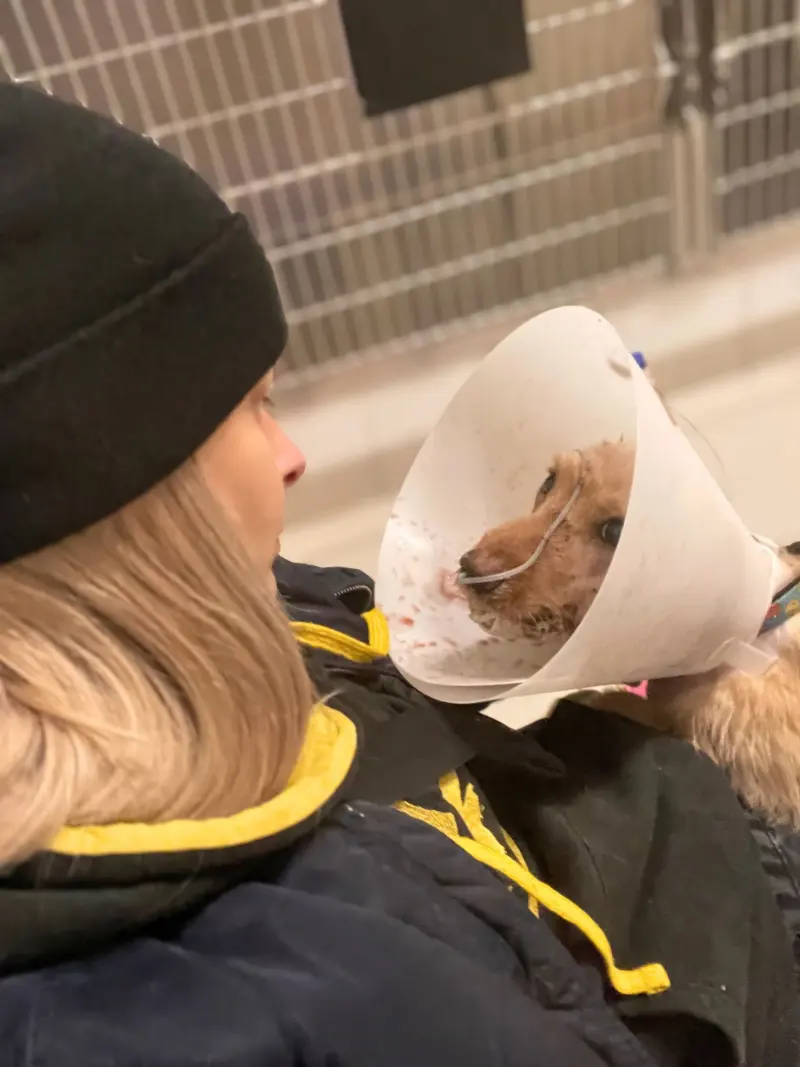
- Vet and therapy. Dressing changes, catheterisation, prescribed treatments, vet visits. What would be an exceptional event for others is part of everyday life here.
Evening
The closing round
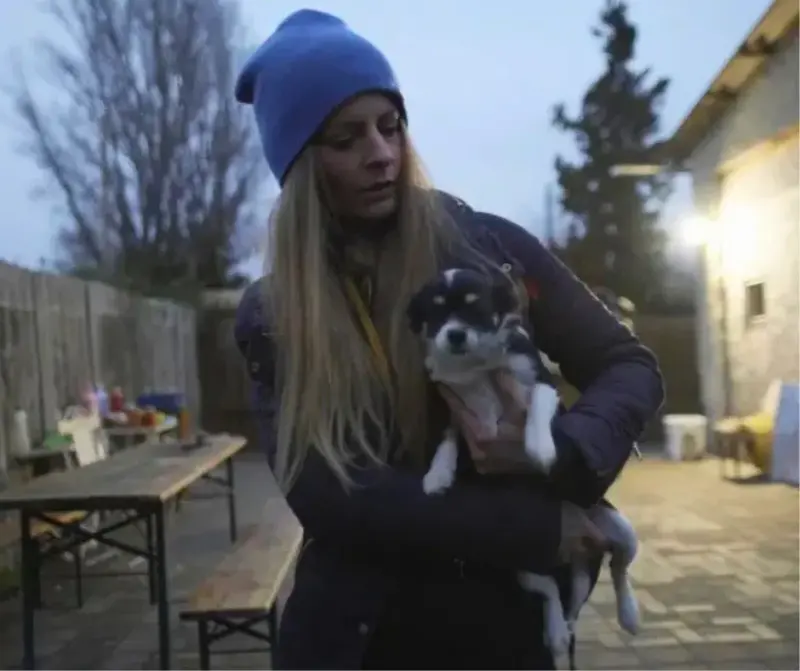
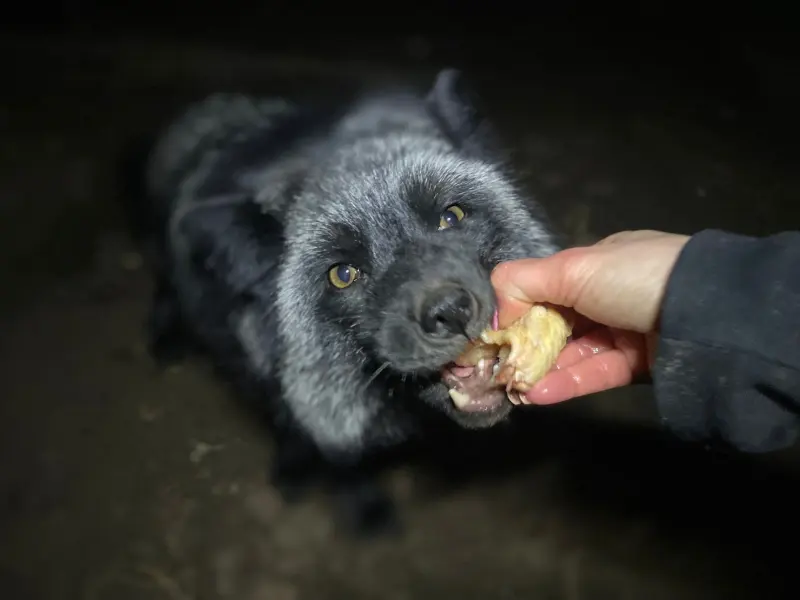
- The last outing, feeding, medication and the evening part of special care.
- Closing round. We go round every enclosure.
- Night. Animals that are ill or recovering are checked at night too. There are cameras where the animals live, and they alert us if something is wrong.
Not everyone can go out at once
The dogs go out in smaller groups, made up of dogs that get on well with each other. Behind each round of outings lie more decisions than can be seen from outside, and as there are several rounds a day, this organisation takes a great deal of time.
For some, company itself is a help. In Kóci’s first months, when Kóci barely trusted people yet, the other dogs were a lifeline, and alongside them Kóci explored the surroundings more bravely.
- BehaviourWe need to know how each of them behaves, including what frightens them and what makes them restless.
- RelationshipsWe need to know who gets on with whom, who avoids whom, and who works well together.
- Physical conditionWe have to take into account what condition each of them is in that day: who moves in a wheelchair, who is recovering, who needs to take it easy.
- SchedulingBased on all this, the day’s outings have to be organised group by group, in every round.
Everyone’s needs are different
Some need special care every day. Here are a few examples, mostly from the stories of individual animals in our care. None of them is a substitute for a vet.
- Emptying the bladder
- With some of our paralysed dogs, we have to help them empty their bladders. This is not a one-off treatment but a regular task that comes round every day.
- Keeping clean
- When Piri arrived, she could only move by dragging herself along like a seal. She has improved a lot, but in this respect she still lags behind healthy dogs. She too has to wear nappies, as does Miso.
- Mobility aids
- Dog wheelchairs and harnesses for blind dogs are only some of our equipment. Various lifting harnesses and orthoses are also in daily use, and one of our dogs needs a drag bag.
- Rehabilitation
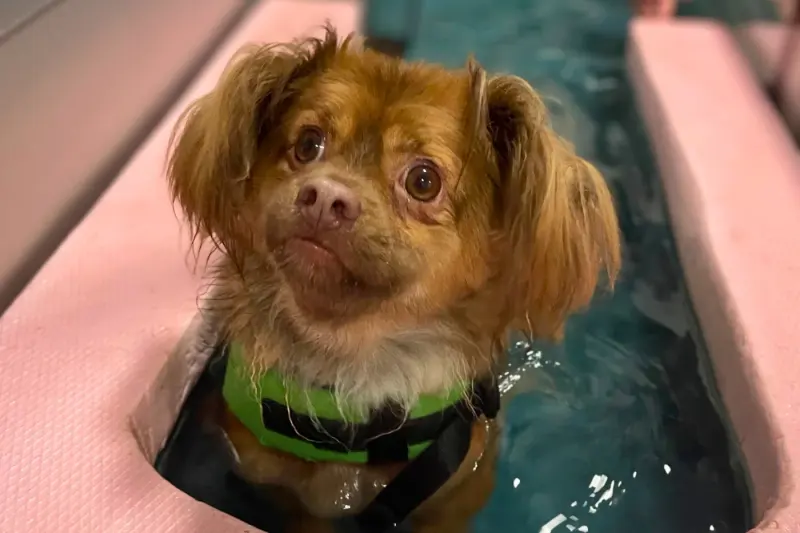
- Rafi, Yoda and Füge went to physiotherapy and hydrotherapy; others were visited here by a physiotherapist. Our vets often give us exercises that have to be done every day for rehabilitation to succeed.
- Medication
- Some need medication throughout their lives, like Joker. Fortunately, most need it only for a shorter time.
- Nutrition
- Everyone gets good-quality food that suits them. Táti can only eat a prescription diet; others eat hypoallergenic food, or get a diet adjusted to their needs when they have diarrhoea. Almost all of our animals get supplements.
Beyond the clinic
A good life is not decided at the vet’s
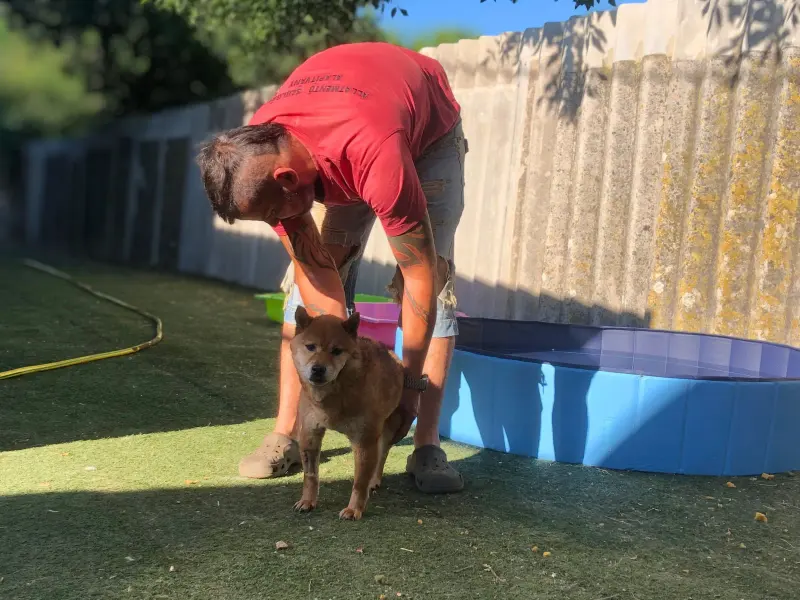
Veterinary care is very important in the life of an injured or chronically ill animal. Vets and rehabilitation specialists help us, many of them for years. Yet an animal spends most of its time not at the vet’s, but in its bed, in the yard and among its companions, eating, playing and resting. That is why care has to cover its whole day.
What counts as a good life
An injury does not define what a life is like
Looking back, we can see that most of the fear was something we brought with us. We thought it through with our own minds, imagining what it would be like for us, instead of starting from what he showed us.
When we see an injured or disabled animal, it is easy to judge it by a human yardstick and look at what has been lost. When a person loses the ability to walk, they measure this against their past and their plans. A dog does not measure itself against who it was yesterday. It wants to eat, sniff, play, and be where the others are.
We cannot know for certain how an animal experiences its own condition from the inside. But we can see how it behaves. So the measure is not how closely its body resembles that of a healthy animal, but what it shows us day after day.
What we watch for
- Does it show signs of pain or lasting stress: withdrawal, loss of appetite, panting at rest, restlessness, disturbed sleep, licking or chewing a part of its body?
- Does it eat willingly?
- Is it interested in its surroundings, and does it respond to familiar people and sounds?
- Does it take the initiative: does it come over, even in a wheelchair or by crawling, and does it ask to be stroked?
- Does it play?
- Does it want to move, sniff and explore when given the chance?
- Can it behave as its species naturally does, and does it have a daily routine it enjoys?
If the answers are mostly good, that says far more about its life than whether it can walk. If they are bad, that is a serious warning sign, even if it can walk.
A case
The operation that did not happen
Janka’s pelvis and both thigh bones had become deformed after old, untreated fractures. Surgery was considered to improve her movement. In the end, our vet judged that the operation would not improve her quality of life but would rather worsen it, because over the years her body had adapted: her muscles and movement had found a balance that surgery could easily upset.
Today Janka shows no signs of pain and is very active. She seeks out people’s company, and squeaky and crinkly soft toys usually do not last long near her.
What we do not gloss over
This does not mean that a permanent condition does not matter. It can bring limitations, require more care and a different environment, complications can arise, and it needs constant attention. In a paralysed dog, what often hurts later is not the paralysis itself but the overloaded front legs, shoulders and neck.
Not every injured animal can have a good life, and not at any cost. If pain cannot be adequately controlled, if recurring complications dominate its days, or if everything that brought it joy disappears, a difficult decision has to be made. Then, together with the treating vet, we have to start from the animal’s real condition, not from fear and not from guilt.
Keeping an animal alive is not an achievement in itself. The measure is how it lives.
In detail, for owners: My dog is paralysed – what should I do now? Part 9 is about whether a dog can have a good life if it will never walk.
Each of our animals is different
The same care does not suit everyone
There is no general recipe. What helps one animal may be too much or too little for another, in exercise, company, diet, environment and daily routine alike. That is why we have to get to know each of them individually. Their condition matters, because it determines their care, but it is not what makes them who they are.
-
Bütyi
He needs less stimulation than most dogs, and he does not seek connection in the same way either. He does not like being held. If he is picked up he gets very agitated, so we do not force it. But he loves running about and jumping over small obstacles.
His condition: hydrocephalus. He used to have seizures every few months; he has not had one for a long time.
-
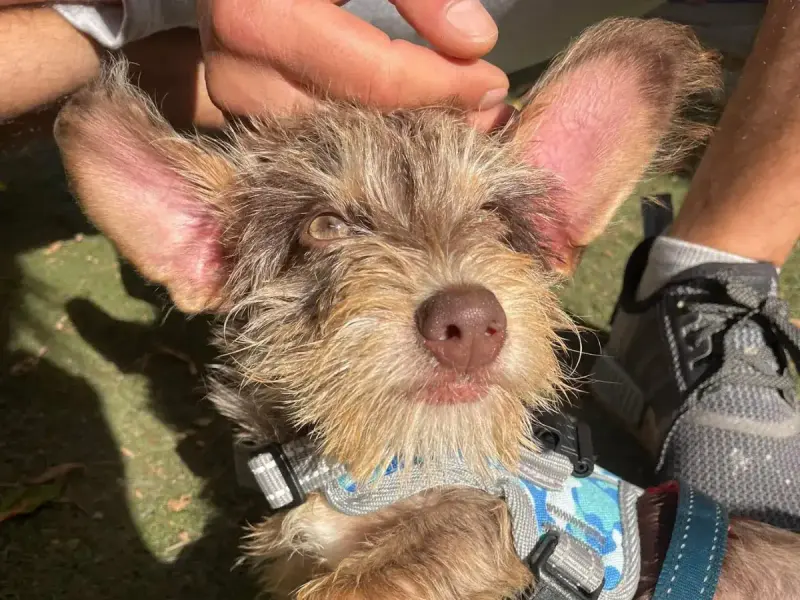
Zsebi
She always has to sniff our hand first. She recognises us by our voices, but she also needs our scent to feel safe. If she gets frightened, whistling can snap her out of it. Birdsong sends her almost into euphoria.
Her condition: born blind and with hydrocephalus.
-
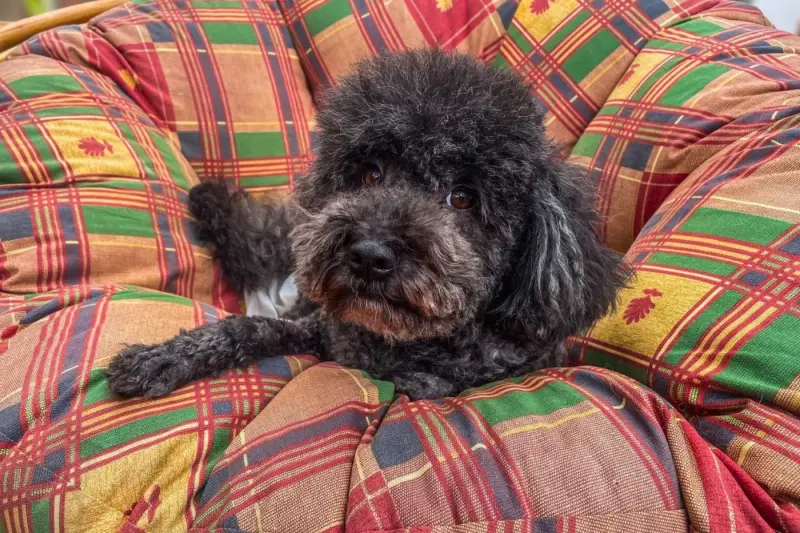
Kóci
Kóci loves soft beds and gets on well with other dogs, but is still choosy about people. Kóci needs to be given time to decide whom to let close.
Kóci’s condition: came from a puppy farm, with deep fear.
-
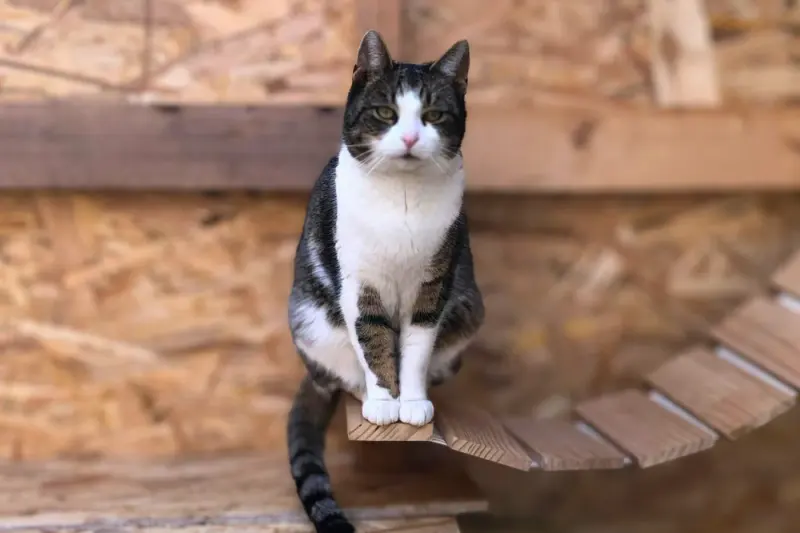
Szonja
She likes to decide for herself when, and how much, closeness fits into her life. With one exception: when food comes into the picture, she can turn into a completely different cat.
Her condition: a comminuted fracture and nearly six months with an external fixator; years later, ear canal surgery.
-
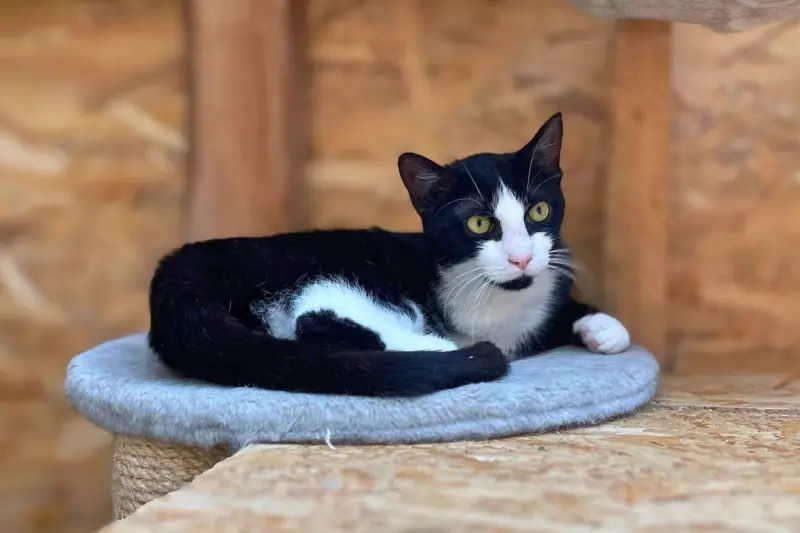
Váltó
One or two metres is his safe distance. If we keep to it and move slowly and predictably, he stays out in the enclosure and does not hide. We do not want to change him.
His condition: he got trapped in a set of railway points, and one of his front legs had to be amputated.
Each of their stories is told on their own page: Our animals
Independence
A say in their own lives
Part of an animal’s welfare is that things do not simply happen to it. Where it lies, whose company it seeks, when it rests and when it plays: wherever possible, it should have a say in these. Good care does not take an animal’s choices away unnecessarily; on the contrary, wherever it can, it gives them back.
Where it rests, and next to whom
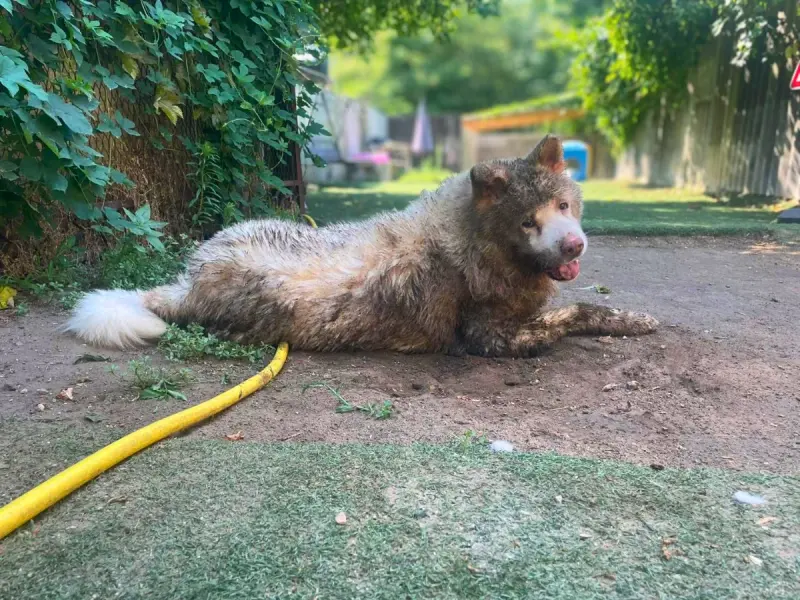
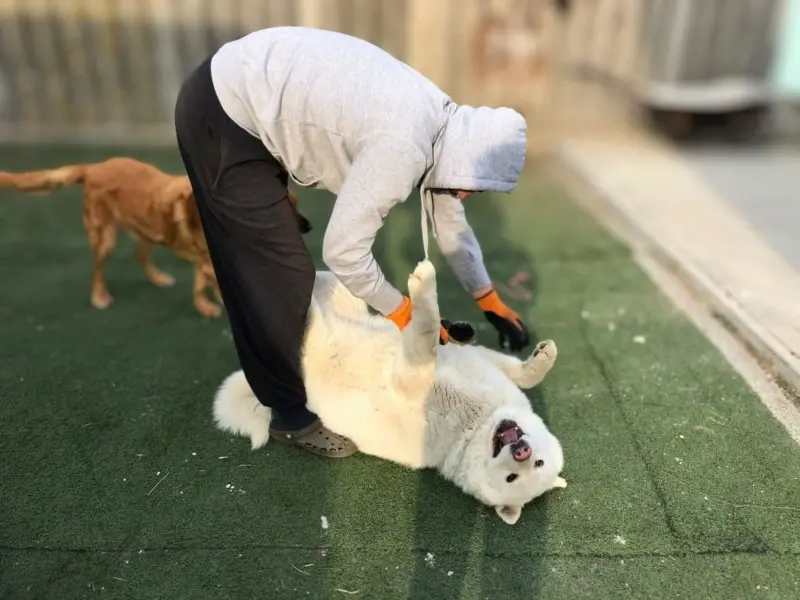
Loki likes to rest on the higher points of the enclosure, where he has a good view of his surroundings, and when resting he often chooses to be near Pietro.
How much distance it keeps
For Kóci we created a separate, fenced-off part of the yard, where Kóci could set the distance. Kóci only dared to move, eat and drink when sure that we were not watching. The rehabilitation was not about learning to love every person, but about regaining a sense of safety in which Kóci decides whom to let close.
Where it goes, and how
A wheelchair is not a sign of giving up. It is there so that the dog can once again go wherever it wants, sniff about and be where the others are. Dió started using his wheelchair almost immediately to play ball: he goes out with a ball, comes in with a ball, and if there is something he cannot reach, the whole neighbourhood hears about it.
The place
The place adapts to its residents, not the other way round
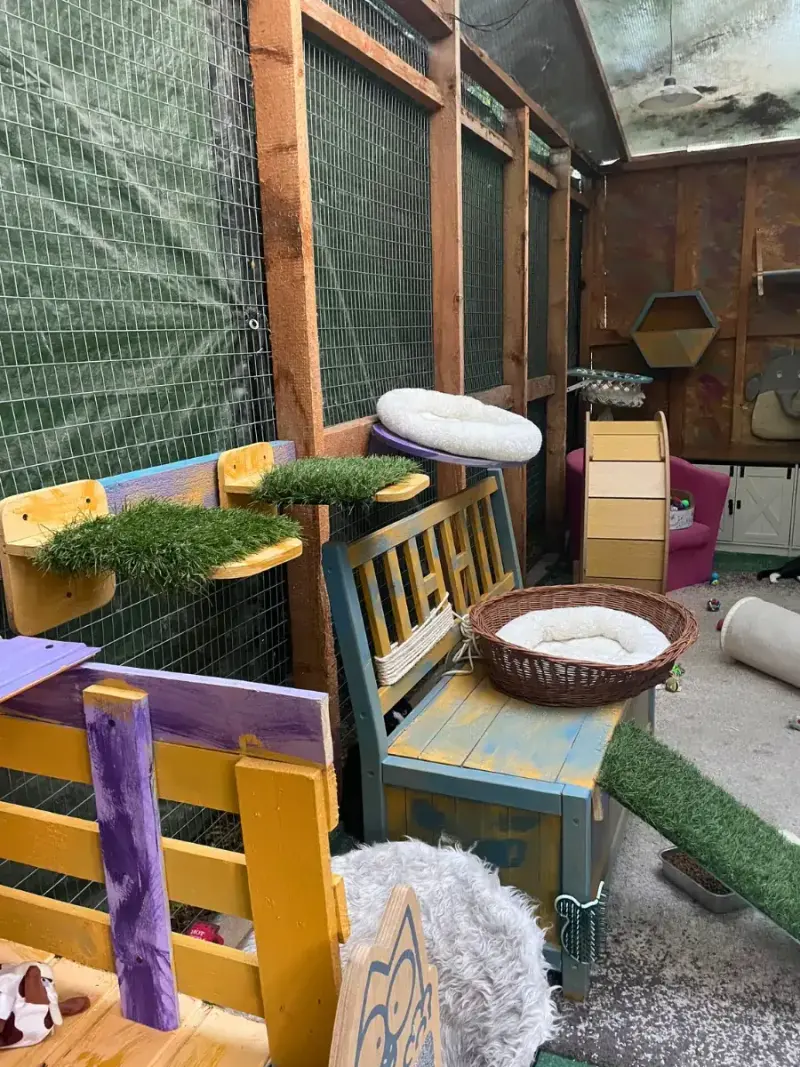
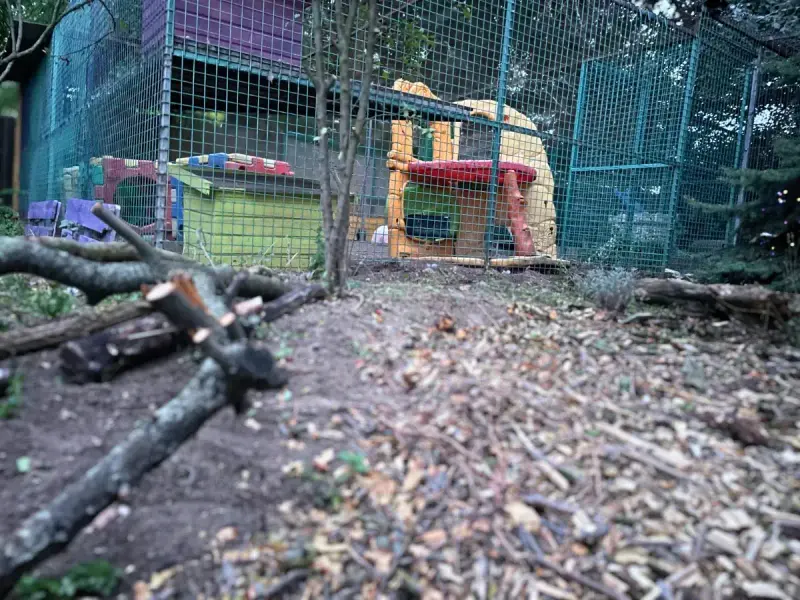
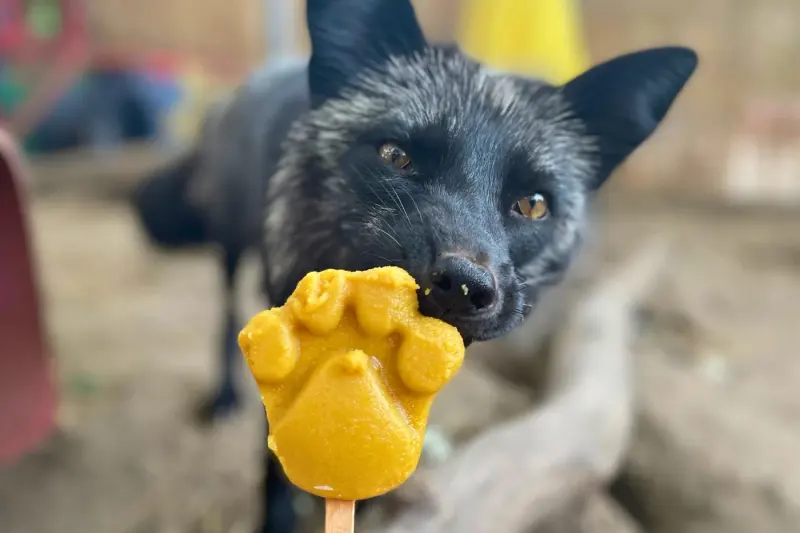
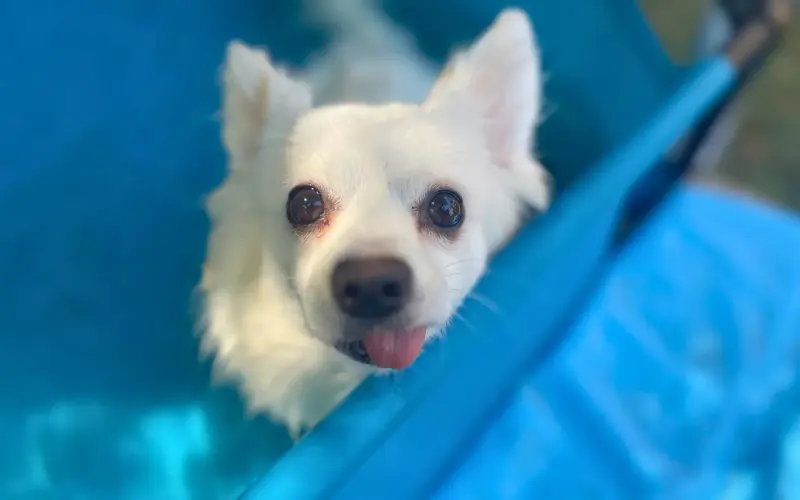
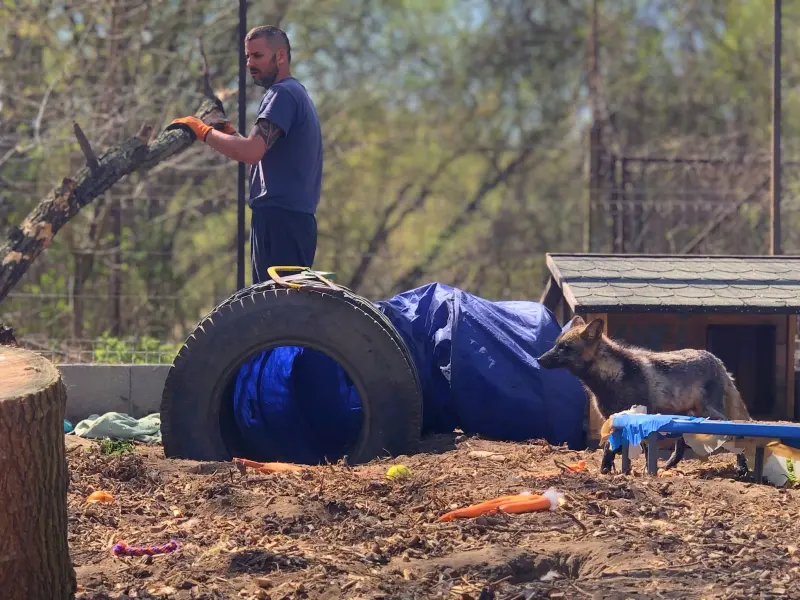
We can give safety to the animals that live in groups in sixteen places: 8 dog rooms, 1 cat enclosure, 6 fox enclosures and 1 aviary. We built them all ourselves and adapted each one to its residents. Improvement is often not a showy investment. A bed that is easier to reach, a different surface, a better route, a new stimulus or an adjusted daily routine can make a big difference.
- 8
- dog rooms
- 1
- large cat enclosure
- 6
- fox enclosures
- 1
- aviary
One square: one room, enclosure or aviary.
Care is never finished
There is no point at which we could say that the ideal place is finished and there is nothing more to do. Good care means constant observation and adaptation. For every animal, the same questions have to be asked again and again.
- Has its condition changed?
- Could its bed be better?
- Could it get around more easily?
- Does its daily routine still suit it?
- Does it need a new stimulus, something new to explore?
- Can we give it more independence?
- Has its behaviour towards its companions changed?
The cameras help with this too. They are not there in the animals’ living areas only to alert us if something is wrong: we also use them to follow how an animal’s behaviour changes and how far it has progressed.
Their condition changes too. Many dogs are very afraid of people at first and tend to freeze in our presence. Through the cameras we can follow how they behave with the other dogs once their quarantine is over. Sometimes we first see a paralysed dog stand up on the screen.
A year in a dog’s life
Zsebi
- July 2025
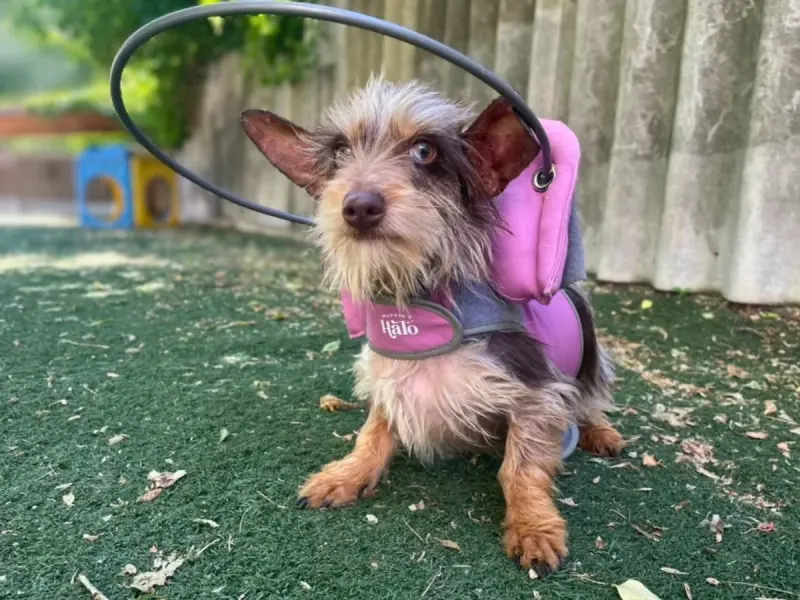
She arrived at seven or eight weeks old. We knew she was blind, but soon after her arrival we saw that she did not behave like other dogs.
- The first months
Our fear was confirmed: Zsebi has hydrocephalus. She got a protective harness for blind dogs, and more freedom in the yard.
- At about eight months old
Until then we had mixed water into her food, because she would not drink on her own. Medical tests gave no answer as to why. Then, all of a sudden, she started drinking.
- Today
She still needs our help, it is true, but she can now sniff about and run around the yard even without the harness.
The people who do it
There is never a day when it can be skipped
Long-term care is hard work. It takes knowledge of many things, from medication through rehabilitation to animal behaviour, a lot to keep in mind, and constant learning. The days are set by the animals’ needs. They need to eat on Sundays too, medication has to be given on public holidays too, someone can fall ill at night too, and in the morning everyone needs to go out just the same.
The foundation is run by Edina and Soma. There is no duty rota: the same two people have known every animal in our care since the day it arrived. That is how we notice when someone eats or moves differently from usual.
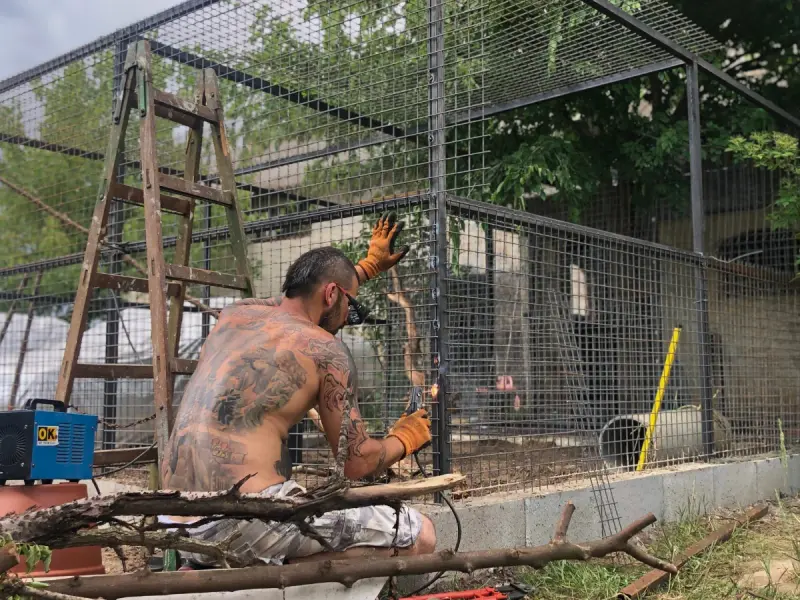
We built the enclosures, the fences and the electrical wiring of the dog rooms ourselves, often with help from our friends. Vets and rehabilitation specialists, partner companies, volunteers and friends help us.
What it cost in 2025
- HUF 5,414,118
- Vets, medication, treatments
- veterinary care
- HUF 4,885,039
- Everyday food and prescription diets
- animal food
- HUF 2,478,820
- Materials for the enclosures, the rooms and repairs
- the site and infrastructure, materials
The full breakdown and all fourteen annual reports: Transparency
What we pass on
The lesson of one story can help others too
Saving an animal matters in itself. But when the same problem comes up again and again, it is worth asking what we can learn from it, who else it could help, what knowledge is missing, and whether there is a fault behind it that no single rescue can put right. What we think can be passed on, we write up in Knowledge & Research. If the problem lies in the rules, it becomes a matter for advocacy.
- What we learnt
Bladder emptying, bedding, skin, rehabilitation, wheelchairs, and how to tell whether a paralysed dog has a good life.
Knowledge & ResearchMy dog is paralysed – what should I do now?For owners who are now standing where we once stood.
- The case
From the same place, again and again
Kóci, Kókusz and Pille came from puppy farms; Joker was kept as a breeding male.
What we learntWhen the same background keeps coming up, we are seeing a system at work.
Knowledge & ResearchPuppy farming: how suffering became a businessHow the puppy-farming network operates, and what the buyer’s responsibility is.
- The case
An official inspection
On 17 March 2025 we had to prove the origin of the foxes in our care.
What we learntThat was when it became clear that rescuing injured animals of huntable species takes place without any legal basis. This cannot be solved by another rescue.
AdvocacyWildlife rehabilitation – putting rescue on a legal footingAn initiative and a draft bill, submitted on 7 September 2026.
- The case
An unexpected result
Mufurc’s rapid test came back FIV-positive, but a PCR test carried out later did not detect the virus.
What we learntAn unexpected result is best assessed together with a confirmatory test and the full history.
One of our animals’ storiesMufurc’s page (in Hungarian)Not every experience becomes a separate article. For now, this one is part of his story.
A permanent injury alone does not tell you what an animal’s life is like
Good care is not merely keeping an animal alive, nor only medical treatment, but a constant search for how that particular animal’s life can be free of pain, safe and active, how it can get enough stimulation, and how it can be as independent as its abilities allow. What we learn along the way is not valuable only for that one animal. If it can be passed on, it can help others too.