 Állatmentő Szolgálat
Foxes
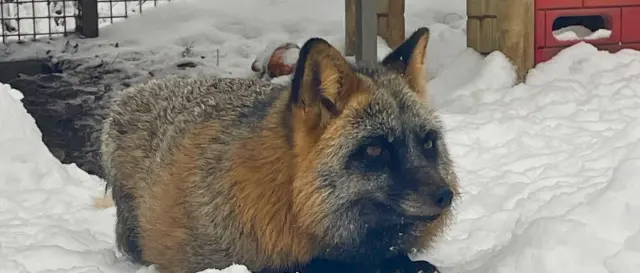
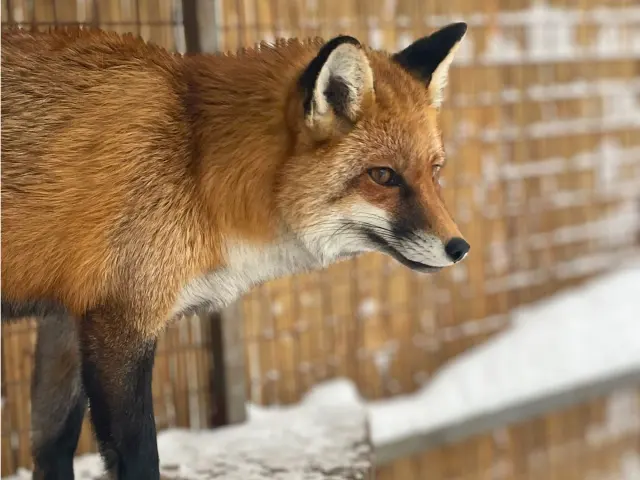
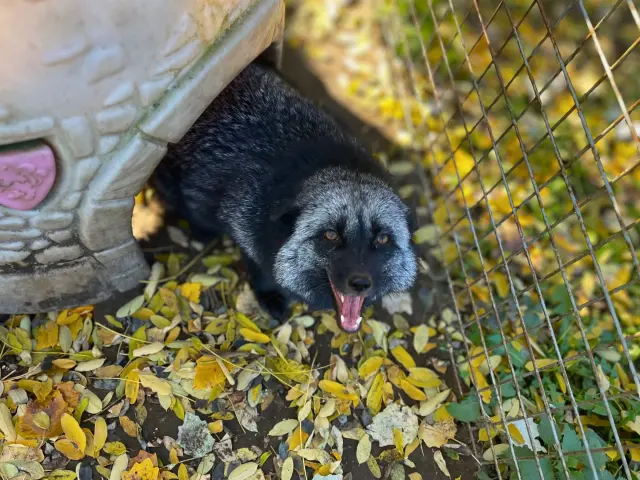
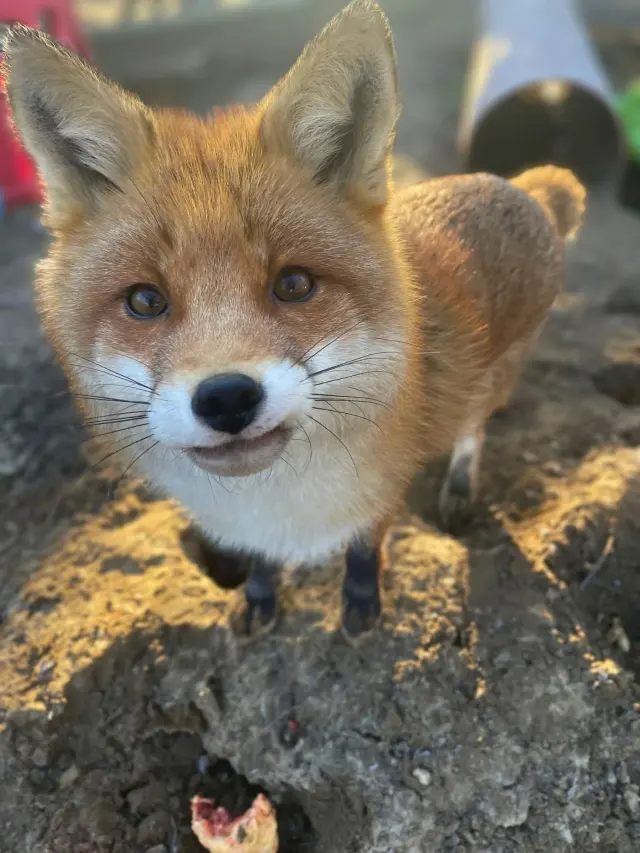
The foxes shown here did not come to us from the wild. They grew up on fur farms, in private keeping or in a shelter, so they would not cope in the wild. They live with us permanently, among other foxes, in enclosures designed for their species.
Where they came from, and why they do not live in the wild
We did not take in any of them so that they could live with us. Every one of them came from human keeping, when for some reason they needed help.
-
Polish fur farm
He survived the closure of a fur farm. The farm was reported on by Otwarte Klatki / Anima International.
-
Ukraine
They came to us from rescues carried out by Dnipro Animals.
-
Private keeping
-
Shelter
-
Caught after escaping
He escaped from where he had previously been kept and was caught by a hunter.
As a species they are red foxes (Vulpes vulpes), but most of them come from captive-bred lines. The silver, cross and fire colour morphs are the result of selection for fur, and in these lines generations of breeding have also adapted their behaviour to the presence of people.
Why they cannot be released
They never had the chance to learn what a wild fox needs to survive.
- Knowing the territory Where to find food, shelter and water, and where not to go.
- Hunting Catching its own food, rather than relying on a predictable feeding routine.
- Avoiding danger and people Knowing that being close to people means risk, not safety.
Released into the wild, they would not find freedom: they would either not survive or come into conflict with people. The exact reason for each of them is described on their own profile.
The fact that these foxes live here does not prove that a fox can or should be kept as a pet.
Quite the opposite: they are with us because someone once tried – on a farm, in a flat, in a cage – and they bear the consequences.
What wildlife rehabilitation is for
Injured or orphaned wild animals are a different matter. The aim of rehabilitating a wild animal is that, wherever possible, it can return to the wild and cope there on its own. To achieve this, six things need attention throughout its care.
- Behaviour The animal keeps the behaviour typical of its species.
- Distance It does not become needlessly used to people.
- Independence It does not associate safety and food with the presence of people.
- Its own kind Where possible, it is raised with others of its species and can relate to them.
- Orientation It finds its way in the natural environment and recognises dangers.
- A chance It gets the best possible chance of an independent life after release.
Wildlife rehabilitation is not successful because the fox is friendly towards people.
Often its future is best served if it does not become attached to us. For us, a good outcome is a hand-reared cub that avoids people. That is why we do not present the animals in wildlife rehabilitation by name, and we do not tame them.
How they live with us
With the foxes who stay with us, too, we keep only as much contact as examinations, treatment and safe care require, and we do not turn them into pets.
We use positive reinforcement so that these situations cause as little stress as possible. The rest is theirs: digging, the den, play and the other foxes.
6fox enclosureswith logs, hiding places and ground for digging
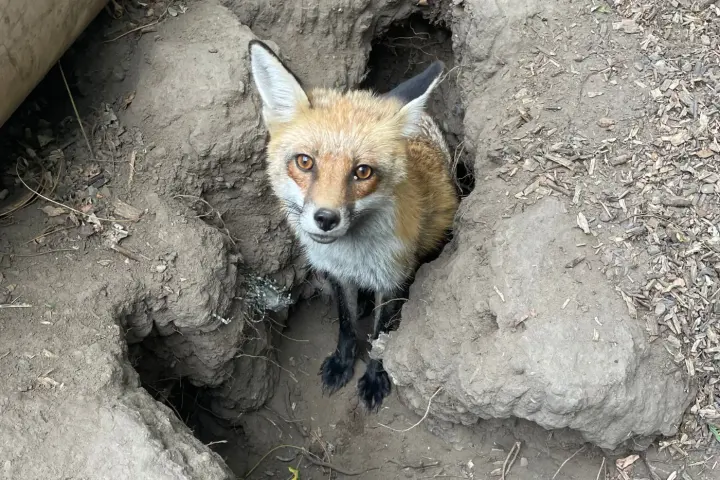
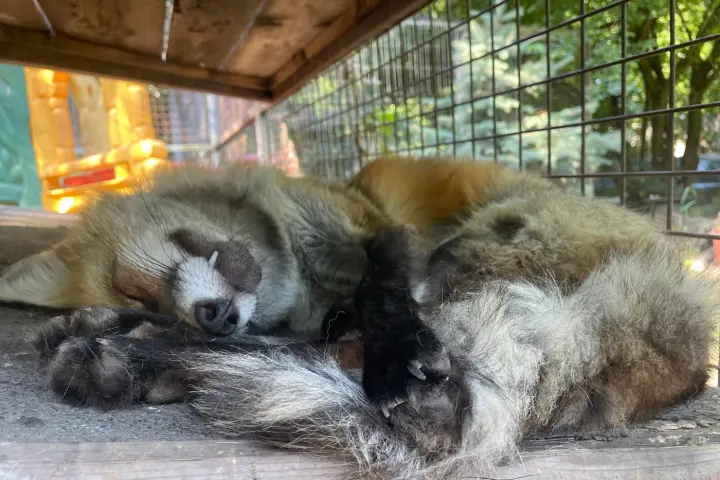
Every new fox goes through the same steps
How long they take varies from animal to animal: for some it is weeks, for others months.
- Observation Quarantine and quiet. At this stage we touch the fox no more than necessary: we watch how it eats, how it moves and what startles it.
- Veterinary examination A full work-up, including deficiency diseases and musculoskeletal problems acquired on the farm. This shows what can be cured and what the fox will have to live with.
- Rehabilitation Species-appropriate food – meat, fruit, eggs – treatment and muscle building. Most foxes born on farms cannot move properly, because they never had the space to.
- Settling in Getting used to the other foxes through controlled encounters, at its own pace. With people, only as much cooperation as its care requires: this is not taming.
Frequently asked questions
Are these foxes tame?
Not in the way a dog is tame. Some approach with curiosity, and some, like Loki, will not let anyone near them. Their behaviour has been shaped by their origins and their past. We do not accustom them to people.
Can a fox be kept as a pet?
The fox is a wild species, and a fox bred in captivity does not become a domestic animal because of it. Most of the foxes living with us came to us precisely because their previous keepers could not care for them. For the people who took Mazikeen in, a single night was enough to see that keeping a fox is not simple.
What should I do if I find an injured fox?
Do not take it home, do not feed it, and do not try to raise it. In Hungary there is currently no body whose job it is to rescue foxes. What you can do, and why you may get conflicting answers, is explained in our article Wildlife rescue in Hungary.
Does the badger belong here too?
The European badger who lives with us, Bazsi, also grew up among people: a family kept him as a dog. His story shows best why raising a wild cub as a pet is not harmless.
Caring for a fox is a commitment of many years.
Food fit for a wild animal – meat, fruit, eggs – regular veterinary check-ups and an enclosure of their own. This is a monthly cost, not a one-off.