 Állatmentő Szolgálat
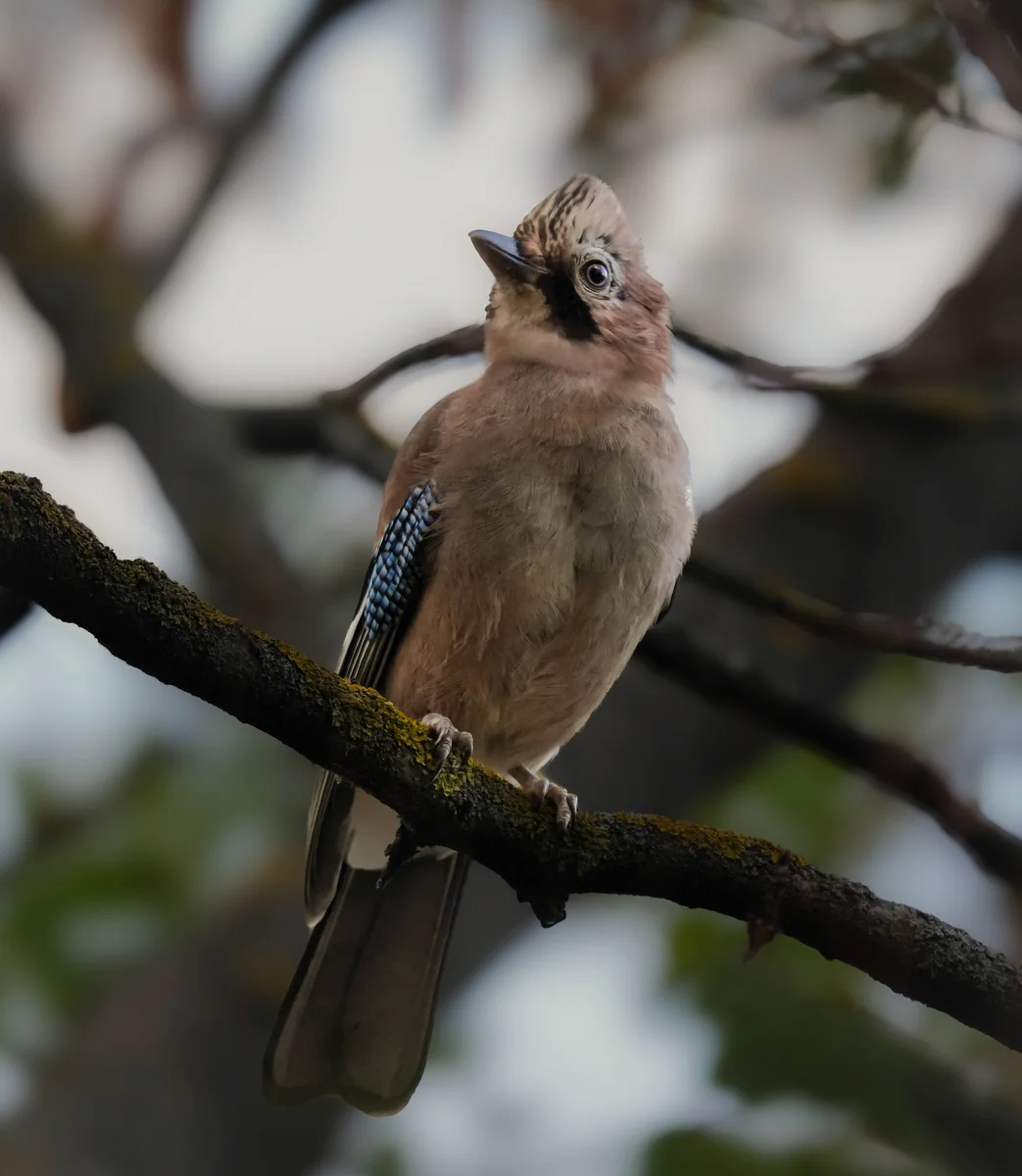
Anyone who has ever found a mallard hit by a car at the roadside, or a magpie caught in a fence, knows that at such a moment you do not think about legislation. You look for a box, make phone calls and try to find a place where people understand the animal. Any normal person sees a life, and the instinct to save it kicks in automatically. It would be frightening if it were otherwise. People who rescue birds typically do not choose according to whether a bird is protected or huntable. There is no such thing as one being allowed to live and the other not because of a label. What matters is whether we can help or not.
Since the amendment of the Criminal Code (Btk.), many wildlife rescuers have not understood how we ended up in the present chaos, and several interpretations are circulating in the community.
Protected and huntable animals: two separate sets of rules
Hungarian law sorts wild animals into groups, and different Acts apply to the different groups.
Protected animals, such as the stork, the swallow or owls, fall under nature conservation law. It is prohibited to harm, capture or keep them. There is an established system for caring for injured individuals: rehabilitation facilities operating under a nature conservation permit may take them in.
Huntable animals, such as the roe deer, the fox, the mallard (commonly called the wild duck), the magpie and the jay, fall within the scope of the Hunting Act (Act LV of 1996 on the Protection of Wild Game, Game Management and Hunting, Vtv.). This Act is about game management: game is the property of the state, and managing it is the task of the holder of hunting rights, which is typically the local hunting association.

This duality is the starting point of the story. The two groups live in the same forest and on the same lakeshore, yet their legal position differs.
What changed on 20 November?
The Criminal Code (Act C of 2012, Btk.) defines what counts as a criminal offence. One of these offences is damage to nature (természetkárosítás, Section 242 of the Criminal Code). Previously it punished anyone who unlawfully acquires, keeps, places on the market or destroys a protected animal or plant.
Act LXVI of 2026 extended this scope. Under the new point (d) of Section 242(1), since 20 November anyone who unlawfully acquires, keeps, places on the market, damages or destroys specimens of certain huntable bird species also commits damage to nature. The hunting decree makes no exception among the huntable bird species, so the rule applies to all of them. The penalty is imprisonment for up to three years.
The rule is tied to a value threshold. Huntable animals have a ‘game management value’ set by law, contained in the implementing decree of the Hunting Act (Ministerial Decree 79/2004 (FVM), Annex 20). The offence is committed if the combined value of the birds concerned reaches ten times the highest small-game value. The highest value is HUF 50,000, so the threshold is HUF 500,000.
| Bird species | Value per specimen | Number of specimens that reaches the threshold |
|---|---|---|
| Greylag goose, bean goose, greater white-fronted goose, grey partridge | HUF 50,000 | 10 |
| Mallard, coot | HUF 25,000 | 20 |
| Woodcock, wood pigeon, collared dove | HUF 10,000 | 50 |
| Magpie, jay, hooded crow | HUF 5,000 | 100 |
Where does the change come from? The EU background
The amendment fulfils an EU obligation. An EU directive is a common rule that every Member State must incorporate into its own law by a set deadline. This is called transposition. Two directives play a role here.
The Birds Directive (2009/147/EC) applies to all species of wild birds naturally occurring in the territory of the Member States (Article 1), regardless of whether a country has declared them protected under its own law. As a general rule it prohibits the deliberate killing and capture of birds (Article 5). For huntable species, regulated hunting is exempted from this (Article 7). Being huntable therefore does not mean that a species falls outside EU bird protection; it means that one specific activity is permitted in respect of it. The often-heard statement that ‘in the EU every bird is protected’ is true in this sense, and in this sense it is also imprecise.
Directive (EU) 2024/1203 on the protection of the environment through criminal law was adopted on 11 April 2024. It requires Member States to treat the unlawful killing, capture and possession of wild birds as a criminal offence, except where the conduct concerns a negligible quantity (Article 3(2)(n)). The deadline for transposition was 21 May 2026.
Hungary did not notify transposition by the deadline. The European Commission, which monitors compliance with EU law, sent a letter of formal notice to 23 Member States, including Hungary, on 15 July 2026. This is the first step in infringement proceedings. The Hungarian Parliament (Országgyűlés) adopted Act LXVI of 2026 on 13 October, and it entered into force on 20 November. According to the European Judicial Network’s (EJN) implementation overview, Hungary notified this Act as its transposition of the Directive (status as of 23 November 2026).
The explanatory memorandum to the Act states that the Criminal Code previously did not cover huntable birds within the meaning of the Birds Directive, and therefore had to be supplemented. Neither the Act nor the explanatory memorandum mentions rescue. The amendment thus implements an EU decision taken two years earlier; it is not about wildlife rescue.
What else was added to the Criminal Code on environmental offences?
The rule on huntable birds is a small part of a larger package. The EU Directive lists twenty environmental offences, from pollution and waste to protected habitats, and Act LXVI of 2026 aligned the Criminal Code with every one of them. The more important changes:
- Environmental damage (Section 241 of the Criminal Code). The Act now punishes not only damage caused to the environment, but also cases where environmental damage harms human health. Where it causes permanent disability or serious deterioration of health, the penalty is imprisonment from one to five years; where it causes death, from five to ten years. It is also punishable if the conduct has not yet caused serious damage but could have done so.
- New offence: breach of EU environmental rules (Section 241/A of the Criminal Code). This covers the irregular dismantling of ships, the prohibited placing on the market of goods linked to deforestation (for example cattle, cocoa, coffee, palm oil, soya, wood), and breaches of the rules on ozone-depleting substances and fluorinated greenhouse gases.
- Illegal trade in wild species. Heavier penalties apply to anyone who commits damage to nature on a commercial scale (üzletszerűen) involving animal and plant species subject to international trade restrictions, and in such cases the assets derived from the offence can also be confiscated more widely. According to the explanatory memorandum, this trade has become one of the most profitable activities of organised crime.
- Natura 2000 sites. Significant disturbance of animal species of Community interest on a Natura 2000 site has become a criminal offence. Anyone who causes particularly significant damage to, or the destruction of, such a site or a protected habitat is punishable by imprisonment from two to eight years.
- One mitigation, too. For species subject to international trade restrictions, even a single specimen used to amount to a criminal offence. According to the example given in the explanatory memorandum, someone who brought home a piece of dead coral found on a beach while on holiday had also committed an offence. The Act now allows a negligible quantity not to be punishable.
Besides environmental offences, the Act also transposed other EU rules, including those on the recovery of assets derived from crime and on electronic evidence. In this context it becomes clear that the point on huntable birds is one element of a comprehensive harmonisation of the law.
The old gap: there is no rule for rescuing huntable animals
The Hunting Act specifies the facilities in which huntable animals may be kept in an enclosed space: game parks (vadaskert), wildlife parks (vadaspark), game farms (vadfarm) and small-game rearing facilities (apróvadtartó telep) (Section 27/A). These serve hunting, display, research or economic purposes. The Act has no concept of a rehabilitation facility. It does not provide for who may capture an injured animal, where they may take it, who may care for it and for how long, and how it may be released. Anyone who keeps game without a permit may be subject to a game protection fine (vadvédelmi bírság) of between HUF 50,000 and HUF 5 million (Section 84).
The authorities have also confirmed the gap in writing. In spring 2026 our foundation asked about the situation in formal enquiries.
- The Game Management Department of the Ministry of Agriculture (Agrárminisztérium) stated on 24 March 2026 (VgF/134-1/2026) that the Hunting Act and its implementing decree do not regulate the keeping of huntable animal species for rescue and care purposes.
- The Agricultural Department of the Pest County Government Office informed us on 4 May 2026 (PE/FE/00334-2/2026) that an injured huntable animal falls within the responsibility of the holder of hunting rights. Its capture, keeping and treatment by a private individual or an organisation is unlawful, in the words of the letter ‘even if the act was motivated by good intentions’ (our translation). No individual permit or exemption on equitable grounds (méltányosság) may be granted, and the consent of the holder of hunting rights does not make the keeping lawful either.
Both documents are for information only, not a binding interpretation of the law. The Act does not expressly prohibit rescue, but it provides no legal basis for it either. The authority concludes from this that, without a legal basis, capture and keeping are unlawful.
The gap did not arise in 2026. The Hunting Act was last amended at the end of 2025: Act XCVII of 2025, whose bill was submitted on behalf of the Government by Zsolt Semjén on 11 November 2025 (T/13053), inserted a new chapter on game that has strayed into built-up areas. It regulates the capture and killing of game that causes damage or poses a risk. This amendment did not provide for the rescue of injured animals either, although it would have been an excellent opportunity.
How did the gap become a criminal law risk?
The new rule in the Criminal Code does not punish anyone who acquires or keeps a huntable bird; it punishes anyone who does so unlawfully. A hunter who shoots a mallard in season and in accordance with the rules does not commit an offence.
What is lawful and what is unlawful is not determined by the Criminal Code but by hunting law. The criminal provision therefore relies on another area of law. If in that area there is no regular route for rescue, then rescue ends up on the unlawful side, whatever its purpose.
Each of the two rules makes sense on its own. One protects birds from poaching and illegal trade. The other regulates game management. The problem arises because between the two there is no place for rescue. As long as the gap could only have administrative consequences, that is, a fine, it was less visible. Since 20 November, above the value threshold, it may also have criminal law consequences.
What does this mean in practice?
For a criminal offence, three conditions must be met at the same time: the animal is a huntable bird, the acquisition or keeping is unlawful, and the combined value of the specimens reaches HUF 500,000.
- Capturing one injured bird or taking it to a rehabilitation facility. This is not a criminal offence, because the value falls far short of the threshold. According to the authority’s information, however, it is unlawful and may have administrative consequences. The government office recommends that the finder notify the holder of hunting rights or the police.
- Caring for many huntable birds. With twenty mallards or a hundred magpies, the value reaches the threshold. This affects rehabilitation facilities, because the law looks at the combined value.
- What cannot be known yet. It is not known whether the courts will add together the value of animals admitted at different times. The new rule has not yet been applied in a rescue situation.
A rescue purpose does not in itself exclude liability. The general rules of the Criminal Code, such as necessity (végszükség) or mistake (tévedés), may come into play in an individual case, but their application is a matter for the authority and the court to decide. This summary is for information only; in an individual case it is no substitute for a lawyer’s opinion.
What was an EU obligation, and what did the Hungarian legislator decide?
It was an EU obligation that the unlawful acquisition and keeping of huntable birds be a criminal offence, with a maximum penalty of at least three years’ imprisonment (Articles 3 and 5 of the Directive).
It was the Hungarian legislator’s decision how the value threshold is defined and at what level it is set. The Directive only says that a negligible quantity is not punishable. It was the Hungarian Act that chose to define this in terms of game management value with a multiplier of ten, and the explanatory memorandum does not explain the size of the multiplier.
It is for the Member State to determine what counts as lawful capture and keeping. The Directive does not provide for rescue. Article 9 of the Birds Directive, however, allows Member States to derogate from the prohibitions under specified conditions, among other things for the protection of flora and fauna. According to a 2020 review by BirdLife International, Member States authorise the operation of rescue centres on the basis of this provision. Hungary regularly applies such derogations for other purposes: between 2009 and 2017 it reported 221–343 cases a year to the Commission.
EU law therefore leaves room to regulate rescue, and there was also time to do so. The text of the Directive has been known since spring 2024. In March 2026 the agriculture ministry recorded in writing that keeping for rescue purposes is unregulated. On 8 September 2026 our foundation sent an initiative and a draft bill to the Ministry of Agriculture and Food Economy (Agrár- és Élelmiszergazdaságért Felelős Minisztérium) and the Ministry for the Living Environment (Élő Környezetért Felelős Minisztérium).
Responsibility does not lie with a single actor or a single year. Hunting, nature conservation and criminal law are regulated by separate ministries, and the question of rescue has fallen between their competences. Fulfilling the EU obligation does not make up for the gap in national regulation, nor does it relieve the legislator of its task in this respect.
What should be regulated?
The solution is not to withdraw criminal law protection. If the law determines who may rescue an injured wild animal, under what conditions and subject to what oversight, then rescue carried out in accordance with the rules is not unlawful, and the Criminal Code does not apply to it.
As a first step, our foundation’s draft bill (in Hungarian) would settle four questions:
- it would provide a legal basis for urgent capture for rescue purposes, if the animal is handed over to a rehabilitation facility or a veterinarian;
- it would state that an animal caught for rescue is not game ‘captured’ (elfogás) within the meaning of the Hunting Act;
- it would create rehabilitation facilities entered in an official register;
- it would require the rehabilitation facility to report the admission to the hunting authority and to the holder of hunting rights within two working days, and to give advance notice of a release.
The detailed permitting regime, the professional requirements and the placement of non-releasable animals would be left to a second step. The draft is a proposal that requires professional and legal review, among other things as regards compliance with the conditions for derogations under the Birds Directive.
The criminal law protection of wild birds and the professional rescue of injured animals are not conflicting goals. Both protect the same animal: one from unlawful killing and trade, the other from the consequences of injury. The problem arises where detailed rules are made for one, while the conditions for the other remain unsettled.
Sources
- 2012. évi C. törvény a Büntető Törvénykönyvről [Act C of 2012 on the Criminal Code], Section 242 (text in force from 20 November 2026) (in Hungarian)
- 2026. évi LXVI. törvény [Act LXVI of 2026] and its explanatory memorandum (in Hungarian)
- 1996. évi LV. törvény a vad védelméről, a vadgazdálkodásról, valamint a vadászatról [Act LV of 1996 on the Protection of Wild Game, Game Management and Hunting]; 79/2004. (V. 4.) FVM rendelet [Ministerial Decree 79/2004 (V. 4.) FVM], Annex 20 (in Hungarian)
- Directive 2009/147/EC on the conservation of wild birds; Directive (EU) 2024/1203 on the protection of the environment through criminal law (links to the Hungarian language version on EUR-Lex)
- European Commission, infringement decisions, 15 July 2026 (INF/26/1380); European Judicial Network (EJN), implementation overview for Directive (EU) 2024/1203, status as of 23 November 2026
- Ministry of Agriculture (Agrárminisztérium), VgF/134-1/2026; Pest County Government Office (Pest Megyei Kormányhivatal), PE/FE/00334-2/2026 (letters in Hungarian)
- BirdLife International: Derogations from the protection of birds (2020)